|

| Antique Dictating Machines |
Antique Dictating Machines

1890
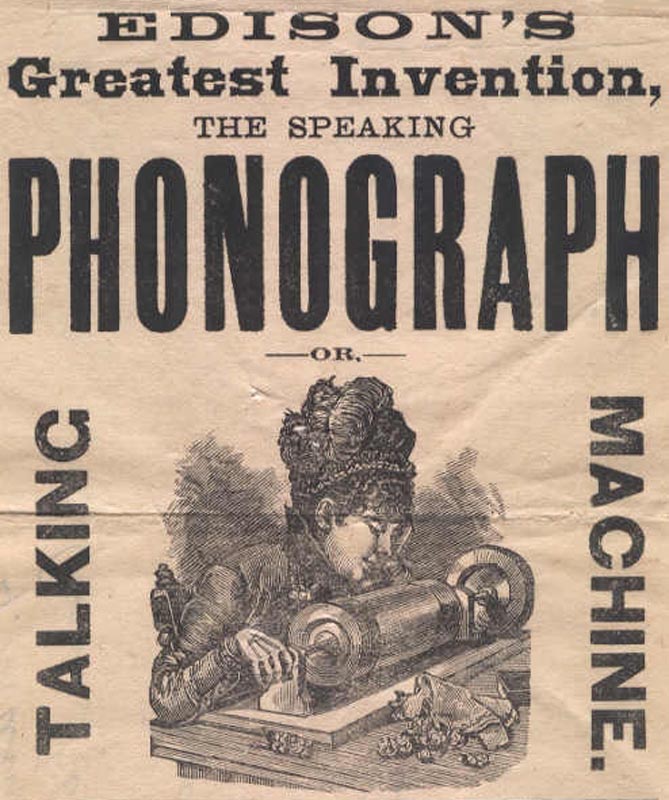
Thomas A. Edison invented the Phonograph, a machine that could record
and reproduce the human voice using a tinfoil 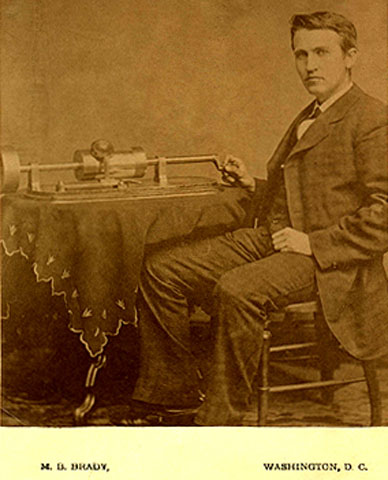 covered cylinder, in 1877.
(See photograph to left.) The 1878 photograph to the right
covered cylinder, in 1877.
(See photograph to left.) The 1878 photograph to the right 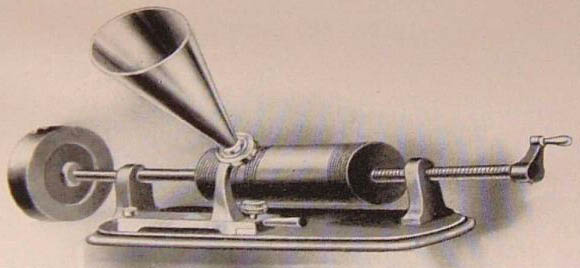 shows
Edison with a phonograph.
In
1878, Edison listed ten uses for the phonograph. At the top of the list was
"Letter writing and all kinds of dictation without the aid of a
stenographer." At the same time, he began to sell phonographs intended for
use in offices. However, the machines did not work well, sales were limited, and
the machines did
not have a significant effect on office work. It was reported that "Several hundred of the machines were put upon the market,
and quite a number were sold, but the Phonograph failed to make a success, for
the reason that the machine was not only a clumsy piece of mechanism, frequently
getting out of adjustment, but more especially because of the fact that the
surface upon which the record was made was pliable, and likely to be obliterated
by a mere accidental pressure upon it." (Harper's Weekly, July 1,
1886. For illustrations of the phonograph see Harper's Weekly, Mar. 30,
1878.) A later account stated that the defects of Edison's first
phonograph "consisted chiefly in a want of distinctness in the articulation
of the reproduced sounds. This defect was so great that it was almost
impossible to understand the reproduction unless the original sounds had been
heard by the listener. Some consonants, too, were much less perfectly
recorded than others. These imperfections were due to the intractable
nature of the tin-foil used for receiving the indentations, and to the fact that
the same diaphragm was employed both for receiving and reproducing the
sounds. Moreover, the great delicacy of adjustment needed made its results
very unsatisfactory, except in the hands of an expert manipulator." (The
American Catholic Quarterly Review, Jan. 1889) By 1879, Edison turned his
attention to the electric light bulb. Later Edison stated, "I finished the
first phonograph more than ten years ago. It remained more or less of a
toy. The germ of something wonderful was perfectly distinct, but I tried
the impossible with it, and when the electric light business assumed commercial
importance, I threw everything overboard for that." (Scientific American,
Oct. 27, 1887)
shows
Edison with a phonograph.
In
1878, Edison listed ten uses for the phonograph. At the top of the list was
"Letter writing and all kinds of dictation without the aid of a
stenographer." At the same time, he began to sell phonographs intended for
use in offices. However, the machines did not work well, sales were limited, and
the machines did
not have a significant effect on office work. It was reported that "Several hundred of the machines were put upon the market,
and quite a number were sold, but the Phonograph failed to make a success, for
the reason that the machine was not only a clumsy piece of mechanism, frequently
getting out of adjustment, but more especially because of the fact that the
surface upon which the record was made was pliable, and likely to be obliterated
by a mere accidental pressure upon it." (Harper's Weekly, July 1,
1886. For illustrations of the phonograph see Harper's Weekly, Mar. 30,
1878.) A later account stated that the defects of Edison's first
phonograph "consisted chiefly in a want of distinctness in the articulation
of the reproduced sounds. This defect was so great that it was almost
impossible to understand the reproduction unless the original sounds had been
heard by the listener. Some consonants, too, were much less perfectly
recorded than others. These imperfections were due to the intractable
nature of the tin-foil used for receiving the indentations, and to the fact that
the same diaphragm was employed both for receiving and reproducing the
sounds. Moreover, the great delicacy of adjustment needed made its results
very unsatisfactory, except in the hands of an expert manipulator." (The
American Catholic Quarterly Review, Jan. 1889) By 1879, Edison turned his
attention to the electric light bulb. Later Edison stated, "I finished the
first phonograph more than ten years ago. It remained more or less of a
toy. The germ of something wonderful was perfectly distinct, but I tried
the impossible with it, and when the electric light business assumed commercial
importance, I threw everything overboard for that." (Scientific American,
Oct. 27, 1887)
Alexander Graham Bell, his cousin Chichester A. Bell, and Charles Sumner
Tainter developed the first practical machine for recording and reproducing
speech. Their Graphophone used wax cylinders. Their first
Graphophone was made in 1885 and 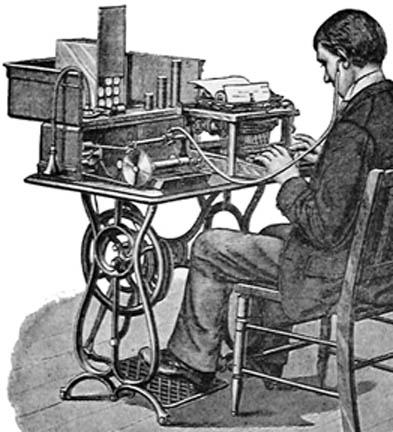 patented and illustrated in Harper's Weekly
in 1886. In 1886, Tainter designed a dictating machine, which was
mounted on a sewing machine table with a foot treadle to supply power. The
commercial Graphophone, which is illustrated to the right, went into production in the fall of 1887.
In 1888,
Tainter wrote that "Graphophones are used in Washington in both houses of
Congress for work in connection with reporting the proceedings, and also by
members for the dictation of their correspondence, etc. Many of the leading
stenographers and lawyers of Washington are also using the machines." (Electrical
World, July 14, 1888) At the Du Pont black powder manufacturing company,
Francis G. du Pont bought a Graphophone dictating machine in 1890. (JoAnne
Yates, Control through Communication, 1989, p. 211)
patented and illustrated in Harper's Weekly
in 1886. In 1886, Tainter designed a dictating machine, which was
mounted on a sewing machine table with a foot treadle to supply power. The
commercial Graphophone, which is illustrated to the right, went into production in the fall of 1887.
In 1888,
Tainter wrote that "Graphophones are used in Washington in both houses of
Congress for work in connection with reporting the proceedings, and also by
members for the dictation of their correspondence, etc. Many of the leading
stenographers and lawyers of Washington are also using the machines." (Electrical
World, July 14, 1888) At the Du Pont black powder manufacturing company,
Francis G. du Pont bought a Graphophone dictating machine in 1890. (JoAnne
Yates, Control through Communication, 1989, p. 211)
After seeing a Graphophone dictating machine, Edison developed a similar machine, which was introduced to the market in 1888. (For illustrations, see Harper's Weekly, June 9, 1888.) Notwithstanding the glowing statement by Tainter that is quoted above, neither Graphophones nor Edison Phonographs sold well for office use in the late 1880s or early 1890s. A cylinder held only a few minutes of recording, and the machines were expensive. In 1894-95, the Edison Class M was $225 and the Graphophone Type K was $150. However, in 1895, the Graphophone Type N was introduced at $40. In 1897, the Columbia Phonograph Co. advertised the Universal Graphophone for office use. This machine was used both to record dictation and to play it back for transcription. It was $50 with a wind-up motor that ran for an hour on one winding or a D.C. motor that ran off a battery, and $60 with a 110-volt A.C. motor. A machine for shaving cylinders so they could be reused was $25.
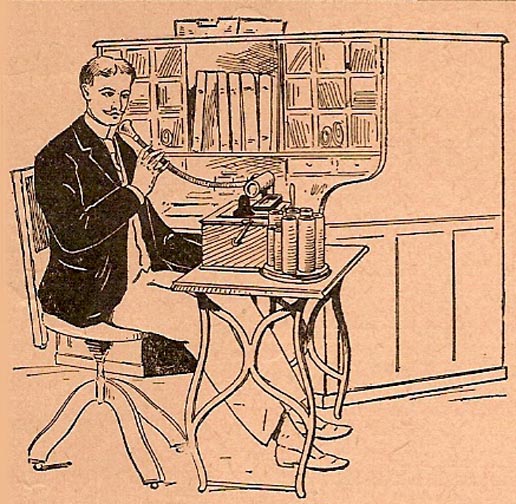
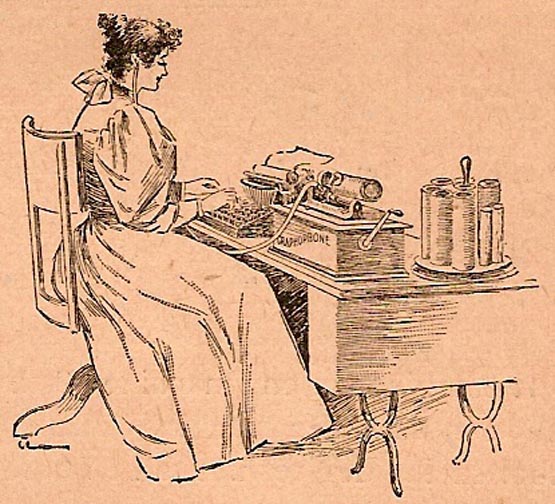
Graphophones, 1898 ad
Edison introduced a new Business Phonograph in 1904. The Edison Business Phonograph was advertised during 1904-12. Commercial Graphophone dictating machines were advertised in business magazines during 1904-07. A 1906 ad claimed that the Westinghouse Co., the Larkin Co., and Sears, Roebuck each used "more than several hundred machines." Another 1906 ad claimed that Westinghouse used about 250 Commercial Graphophone machines in its Pittsburgh offices. Around 1907 (in any case by 1908), Graphophone dictating machines began to use the Dictaphone trademark.
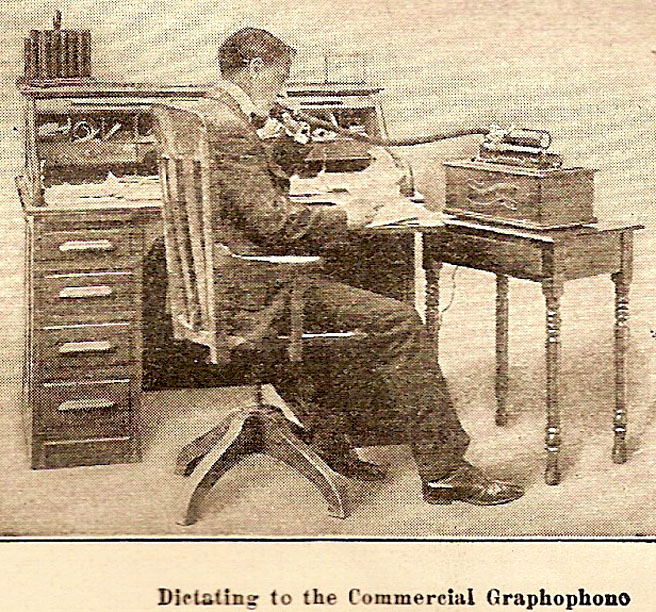
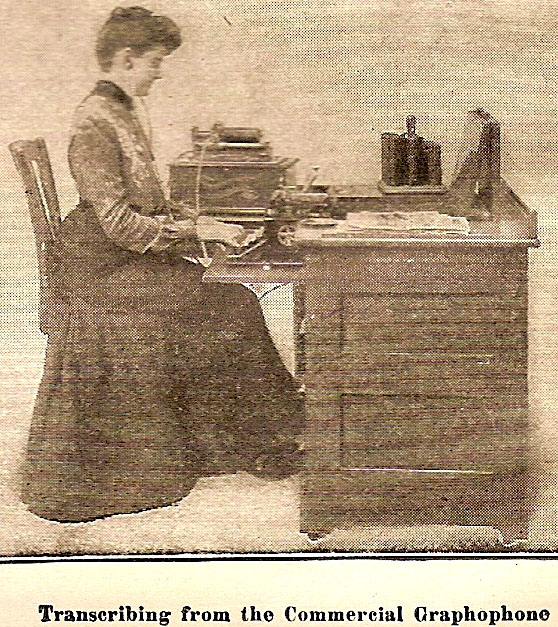
Commercial Graphophones, 1905

Stenographer transcribing using wood-cased dictating machine and
upstrike typewriter
Photographs
of early office interiors and business school classrooms suggest that office use
of Graphophones and Phonographs was very limited until around 1906 but then
increased rapidly. The
earliest 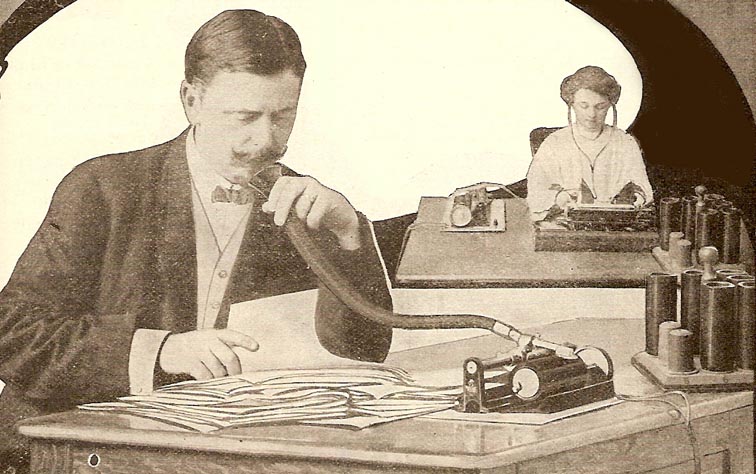 photographs we have seen of dictating equipment in use in offices were taken at Frank Lloyd Wright's Larkin Building,
which was completed in 1904 for the Larkin mail-order company in Buffalo, NY.
The photographs, which are in Jack Quinan, Frank Lloyd Wright's
Larkin (1987), show numerous Graphophone machines. The fact that
the machines were built into custom-designed desks suggests that the machines
were installed in 1904, and clothing and hair styles suggest that the
photographs were taken soon after the building opened. A similar
built-in Columbia Business Graphophone system from the Columbia Phonograph Co.
is pictured in the 1906 ad to the right.
photographs we have seen of dictating equipment in use in offices were taken at Frank Lloyd Wright's Larkin Building,
which was completed in 1904 for the Larkin mail-order company in Buffalo, NY.
The photographs, which are in Jack Quinan, Frank Lloyd Wright's
Larkin (1987), show numerous Graphophone machines. The fact that
the machines were built into custom-designed desks suggests that the machines
were installed in 1904, and clothing and hair styles suggest that the
photographs were taken soon after the building opened. A similar
built-in Columbia Business Graphophone system from the Columbia Phonograph Co.
is pictured in the 1906 ad to the right.
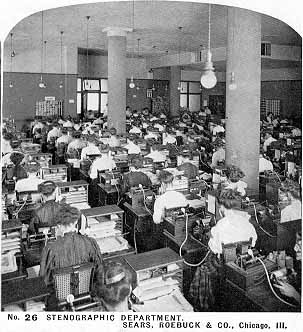 The next earliest photograph that we have seen of dictating equipment in use in an office
is the 1906 image to the left, which shows a large number of transcribing machines
in the Stenographic Department at Sears, Roebuck,
The next earliest photograph that we have seen of dictating equipment in use in an office
is the 1906 image to the left, which shows a large number of transcribing machines
in the Stenographic Department at Sears, Roebuck, 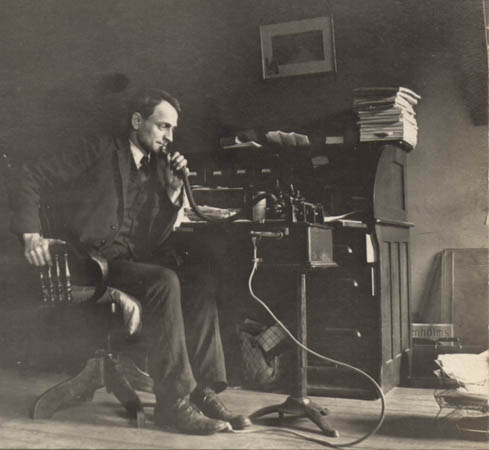 another mail-order company.
For additional photographs taken during 1906-09 that show
office interiors with dictating machines, click on the photo to the right and here.
No business college catalog that we have seen from the 1890s refers to or
illustrates dictating 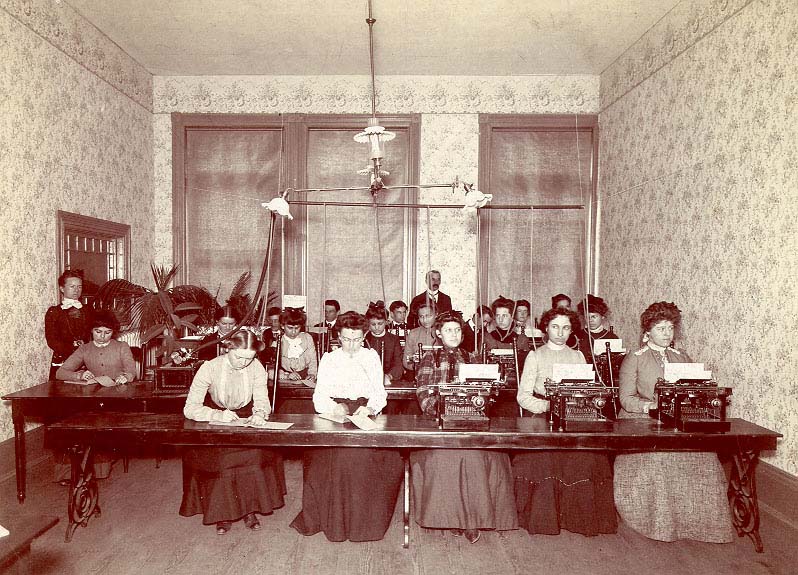 equipment. The
c. 1906 photograph to the right shows students at Pawtucket Business College,
Pawtucket, RI, learning to transcribe dictation being reproduced by a
transcribing machine. (For our exhibit with additional photographs of early
business college classrooms with dictating equipment, click here.)
equipment. The
c. 1906 photograph to the right shows students at Pawtucket Business College,
Pawtucket, RI, learning to transcribe dictation being reproduced by a
transcribing machine. (For our exhibit with additional photographs of early
business college classrooms with dictating equipment, click here.)
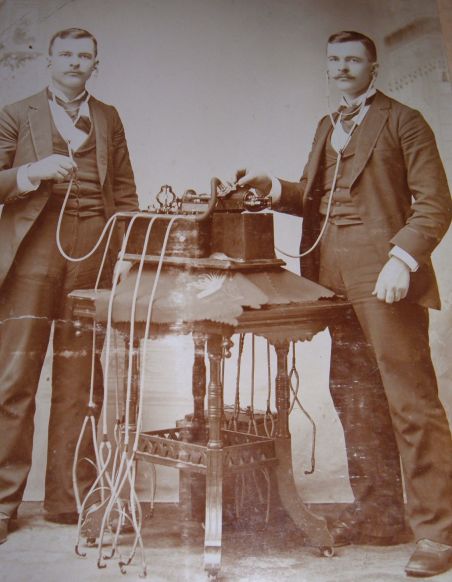 The
preceding classroom photograph shows that a number of stenography students, each
with a set of earphones, could listen simultaneously to a single transcribing
machine. The 1894 photo to the right provides a closer view of a
phonograph (not a dictating machine) with multiple earphones.
The
preceding classroom photograph shows that a number of stenography students, each
with a set of earphones, could listen simultaneously to a single transcribing
machine. The 1894 photo to the right provides a closer view of a
phonograph (not a dictating machine) with multiple earphones.
Still, Frank C. Spalding, Stenographer's Business Practice, 1907, which "furnishes advanced office practice for stenographers," does not even mention dictating equipment.
Yates reports that "By 1911 a government study found that many large companies, such as the Pennsylvania Railroad, were using dictating machines in conjunction with typewriters to eliminate or reduce the more expensive use of stenographers. In fact, the study reported, in the Pennsylvania Railroad's correspondence department, 'the installation of these machines enabled the typewriters [i.e., typists] to produce from 60 to 80 letters per day, whereas under the old system the average output of each typewriter was only 30 to 40 letters daily.'" (JoAnne Yates, Control through Communication, 1989, p. 45) The 1911 catalog of Wilson's Modern Business College in Seattle, WA, says that students are trained to use the Edison Business Phonograph, and the 1913 catalog of the American Business College in Minneapolis, MN, includes a photograph of an Edison dictating machine and indicates that students receive "Dictaphone Practice."
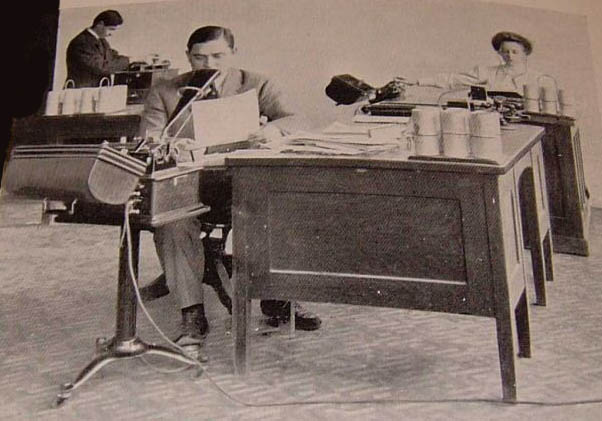 Until 1911, the cases of Graphophone
(aside from those that were built into desktops) and Edison machines were brown wooden
boxes similar to those used on domestic phonographs. (Photograph to right shows
a 1911 Edison Business Phonograph.) These boxes held motors. Beginning
in 1912, advertisements for
the Edison Dictating Machine and Dictaphone show that the wooden boxes had
been replaced by black metal ones.
Until 1911, the cases of Graphophone
(aside from those that were built into desktops) and Edison machines were brown wooden
boxes similar to those used on domestic phonographs. (Photograph to right shows
a 1911 Edison Business Phonograph.) These boxes held motors. Beginning
in 1912, advertisements for
the Edison Dictating Machine and Dictaphone show that the wooden boxes had
been replaced by black metal ones.
In 1913, the Parlograph, which was made by Carl Linström AG in Berlin, Germany, was advertised in France, and the Roneo Co. introduced the Roneophone dictating
machine in the UK and France. In 1916, the American Parlograph Corp. advertised a Parlograph dictating
machine. The Parlograph recorded on cylinders while
the Roneophone recorded on disks.
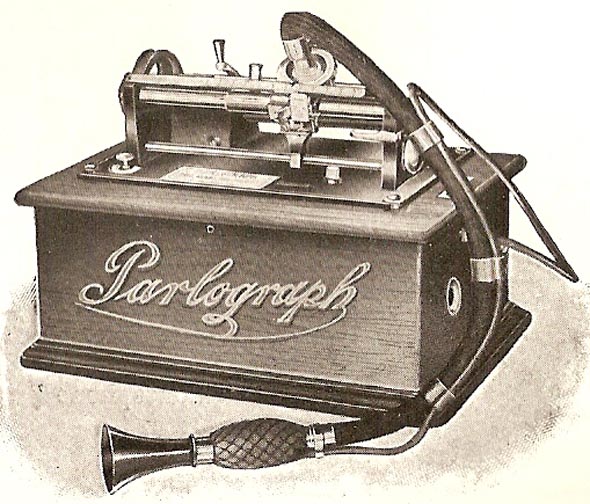
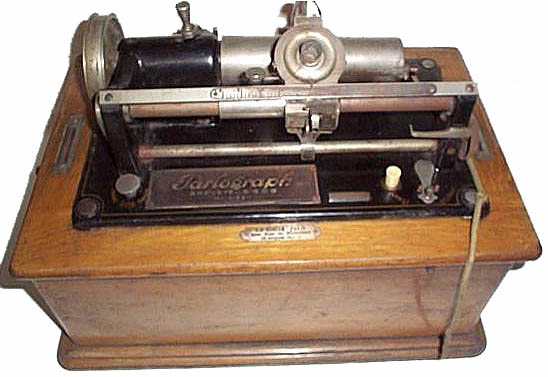
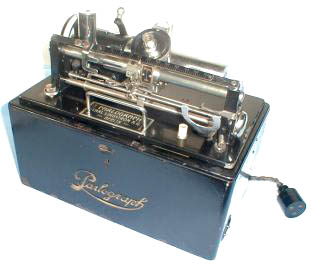
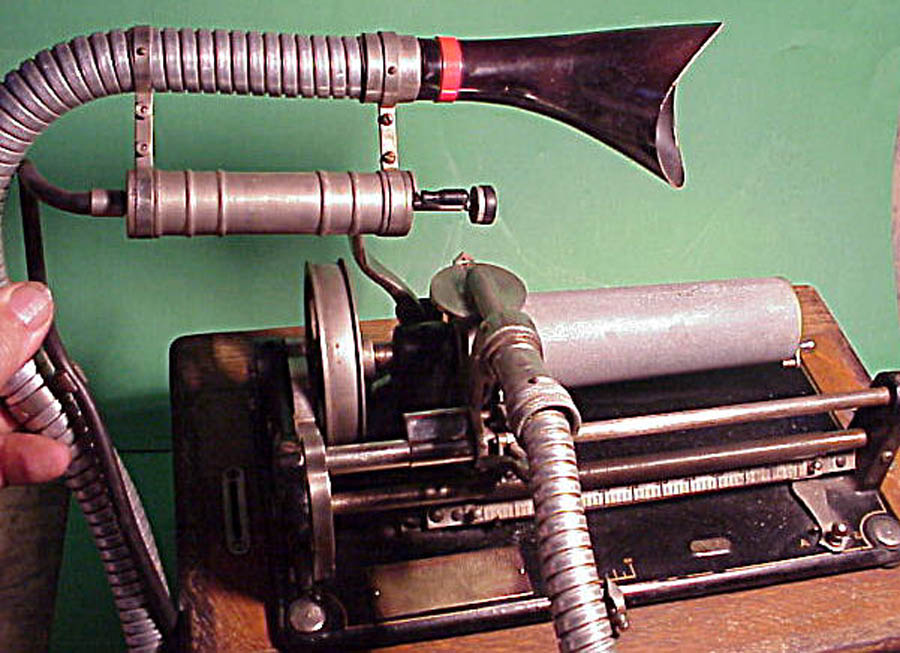
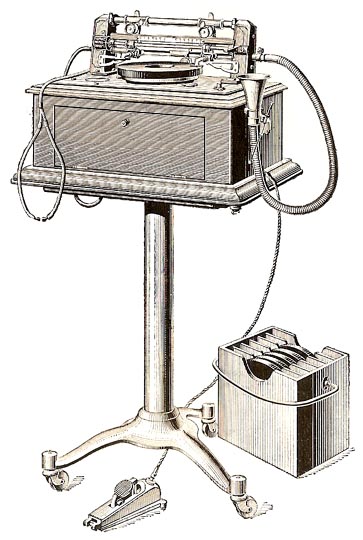
The Parlograph image to the far left appeared
in Le Bureau Moderne in 1913.
The Parlograph left of center was sold in France.
The Parlographs in the center and right of center were sold in Germany.
The Roneophone to the far right appeared in Le Bureau Moderne in 1913.
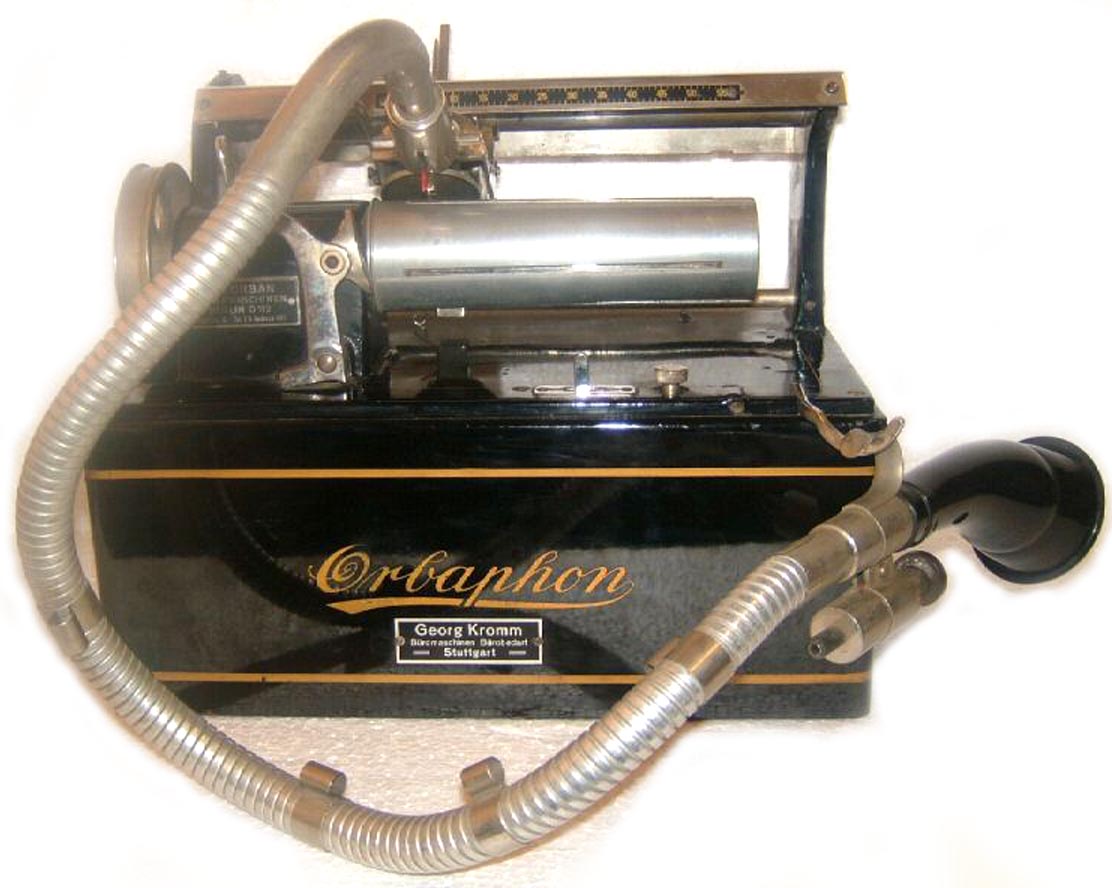
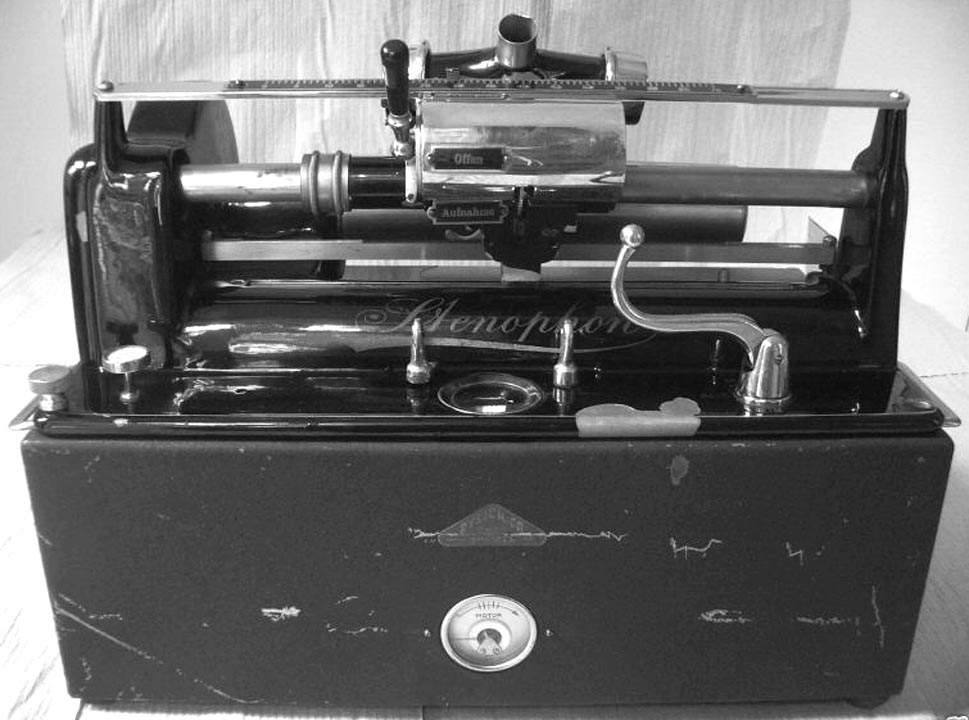
Left: Orbaphon, George Kromm, Stuttgart, Germany
Right: Stenophon, Rysick & Co., Dresden, Germany
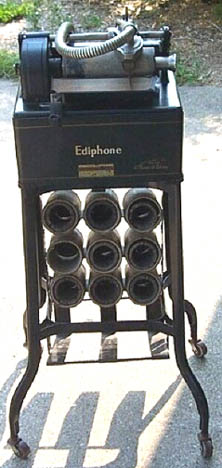
Edison machines began to use the Ediphone trademark at the end of 1917.
Late nineteenth century and (at least in the case of Edison products) early 20th century dictating machines consisted of a single unit that was used both to record and to reproduce speech. By 1920, however, the following description applied: "The complete dictating machine equipment involves four units: first, the dictating machine which receives the message from the dictator and inscribes it on a cylinder; second, the wax cylinders on which the messages are recorded; third, the transcribing machine which reproduces into the ear of the typist the words inscribed on the cylinders by the dictating machine; and finally, the shaving machine which shaves or scrapes the record of former dictation from the wax cylinders and gives them a smooth surface so that they can be used again." (W. J. Graham, Cost Accounting and Office Equipment, American Technical Society, 1929, p. 209) In the 1920s, each cylinder held approximately 1,000-1,200 words and could be reused up to 100-130 times.
In 1924, the Dictaphone Model 7 dictating machine was $190. The Model 7 transcribing machine was $175. The addition of a stand to either machine increased the price by $5. The shaving machine was $85. Wax cylinders were $.60 each. Ediphone units had approximately the same prices. (The American Digest of Business Machines, 1924)
| Dictating
Machines
The dictating machine's "principal parts are as follows: an electrically operated revolving mandrel to hold the wax cylinder; the recording device, which is a needle in a diaphragm; the tube and the glass mouthpiece; the control devices by which the dictator can start or stop the rotation of the cylinder, or place the needle in a recording position; the motor and the mechanism which serves to operate the cylinder." (Graham, 1929) |
Click on Image to Enlarge |
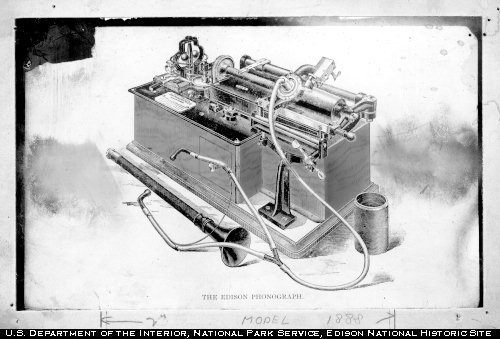
| Edison Dictating Machines | |
| Edison Class E Electric Phonograph 1888 Edison National Historic Site 29110027 |
 |
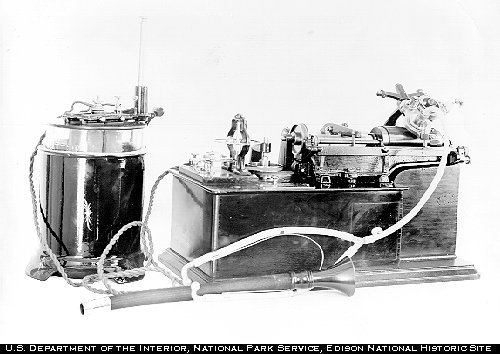
| Edison Perfected Phonograph 1889 Edison National Historic Site 29110040 |
 |
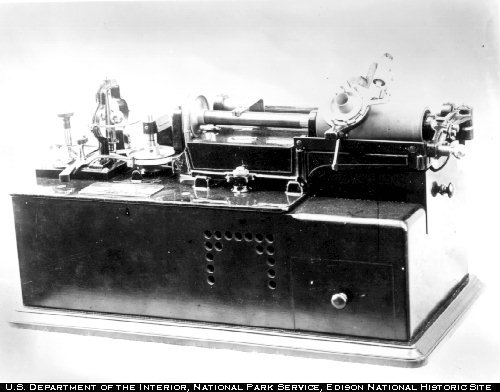
| Edison Class M Electric Phonograph 1890 Edison National Historic Site 29110029 |
 |
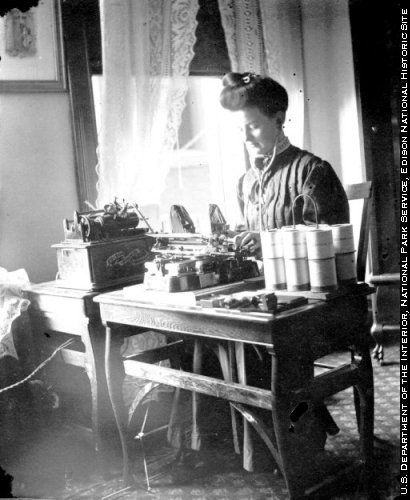
| Edison Phonograph 1905 Photograph shows a demonstration of an Edison Phonograph
being used |
 |
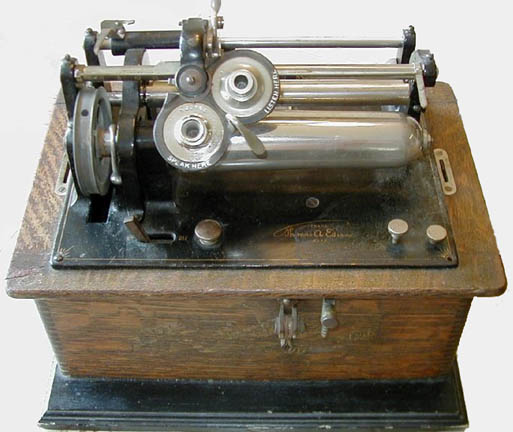
| Edison Business Phonograph Patented 1900-1907 Edison Business Phonograph Co. Orange, NJ The machine was equipped both to record and to play back. The photograph to the right shows separate fittings, labeled "Speak Here" and "Listen Here," for the recording and listening attachments. |
 |
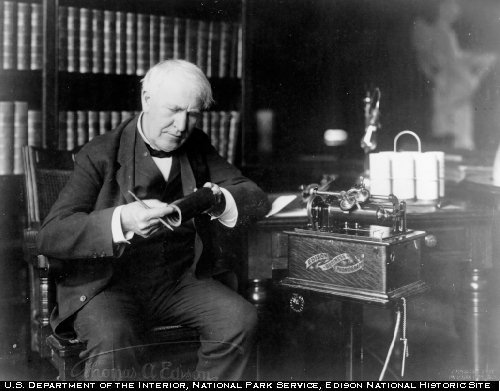
| Edison Business Phonograph Edison Business Phonograph Co. Orange, NJ Source: Edison National Historic Site 14645001 |
 |
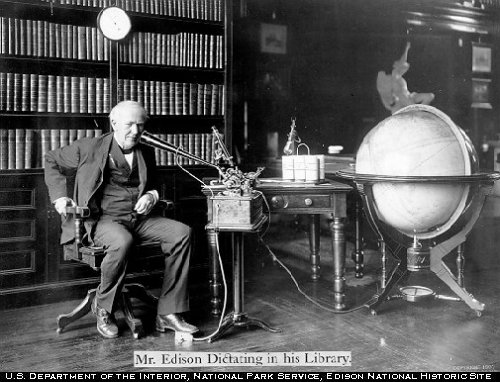
| Edison Business Phonograph 1907 Edison Business Phonograph Co. Orange, NJ Source: Edison National Historic Site |
 |
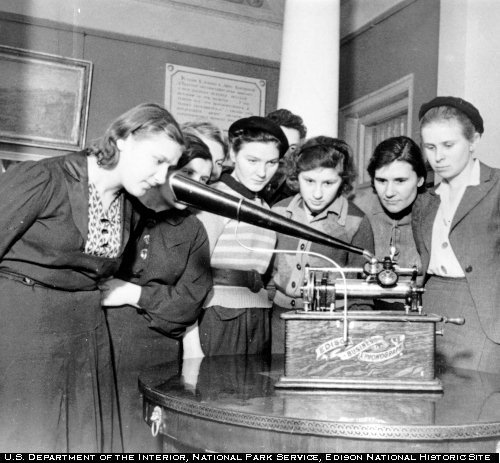
| Edison Business Phonograph 1908 Edison Business Phonograph Co. Orange, NJ Source: Edison National Historic Site 29310004 (Photo c. 1940) |
 |
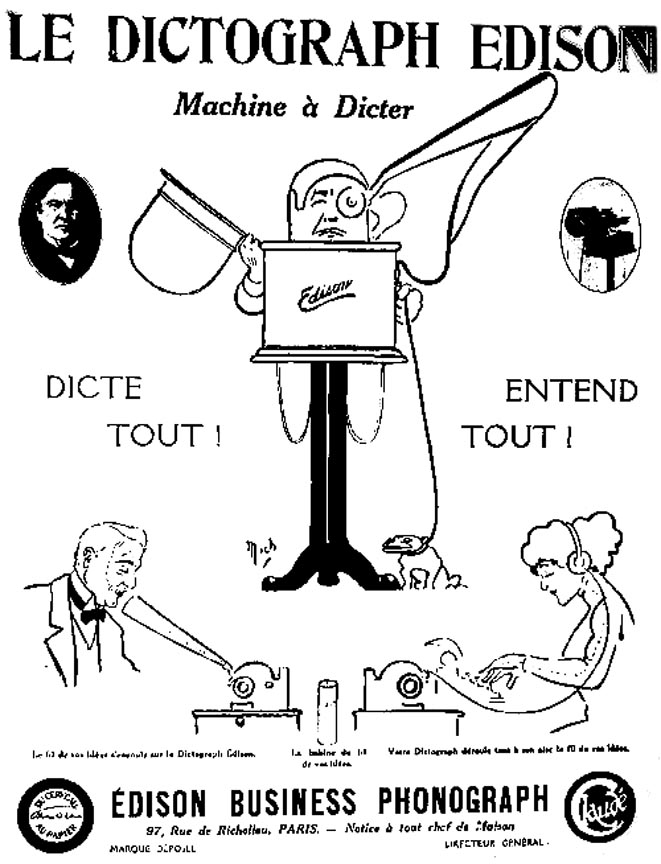
| Le Dictograph Edison Advertised 1912 Edison Business Phonograph Paris, France |
 |
| Edison with Steel Cabinet Dictating Machine | 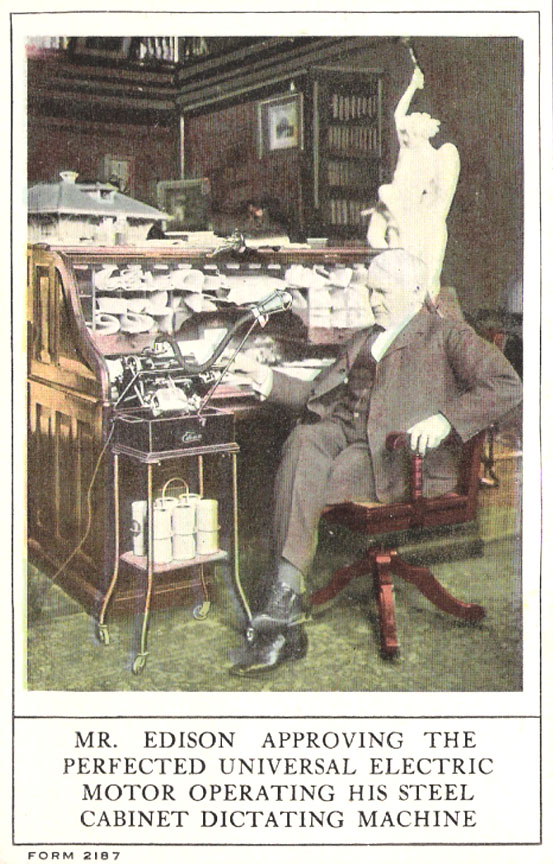 |
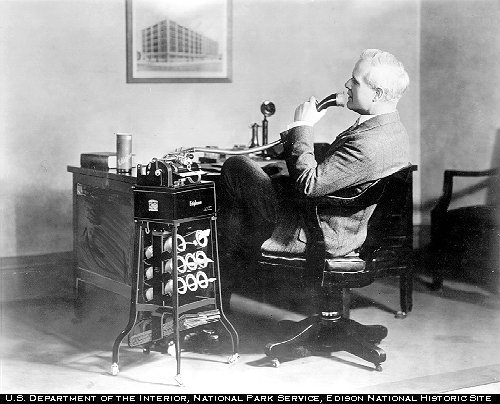
| Edison Dictating Machine Thomas A. Edison, Inc. Orange, NJ Source: Edison National Historic Site 29320479 |
 |
| Edison Dictating Machine, Model E Thomas A. Edison, Inc. Orange, NJ |
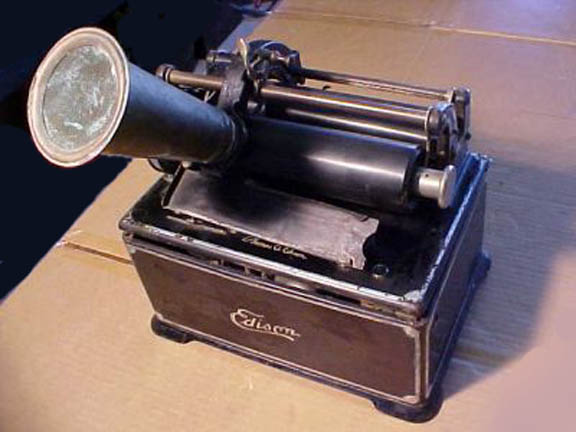 1910 patent |
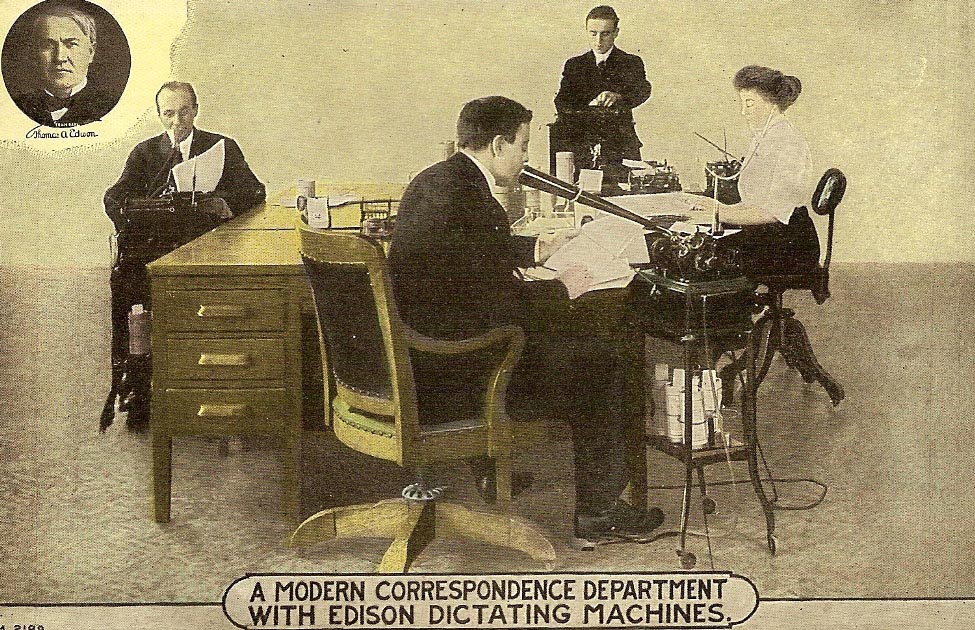
| Correspondence Department
with Edison Dictating Machines
Men left and front center are dictating. Woman with typewriter at right has a headset and is transcribing. |
 |
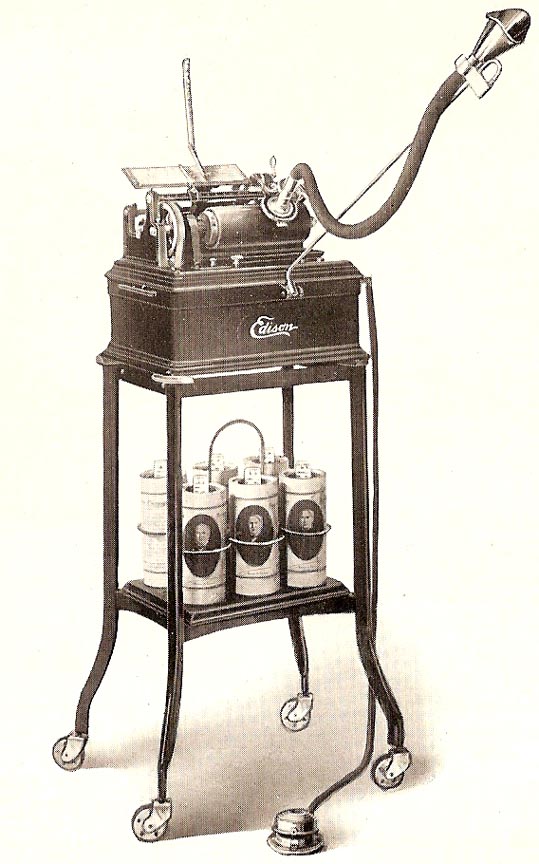
| Edison Dictating Machine with
Auto Dictation Index Advertised 1912 Thomas A. Edison, Inc. Orange, NJ This image shows a machine with an Edison Auto Dictation Index. Its purpose is described immediately below. Courtesy of the Museum of Business History and Technology (MBHT) |
 |
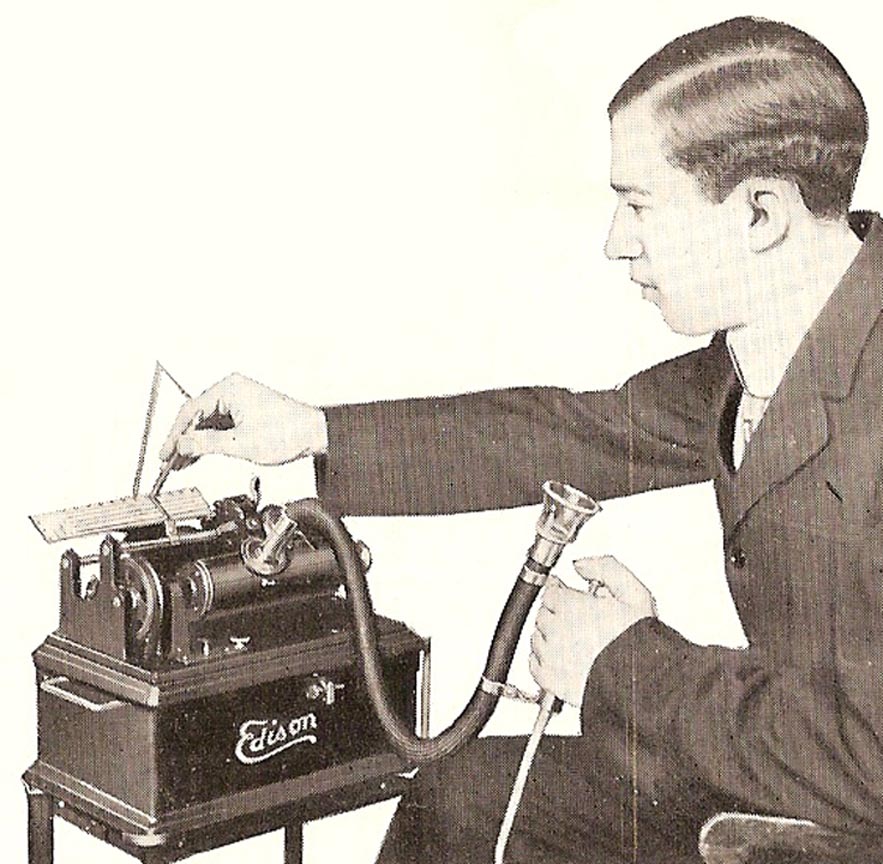
| Edison Dictating Machine with
Auto Dictation Index Advertised 1913 Thomas A. Edison, Inc. Orange, NJ This image shows a machine with an Edison Auto Dictation Index. A paper and pencil are used to identify where different pieces of dictation begin and end on the cylinder, and to provide instructions to the transcriber regarding what is to be done with each piece. Courtesy of the Museum of Business History and Technology (MBHT) |
 |
| Ediphone Dictating Machine Patented 1909-1921 Thomas A. Edison, Inc. Orange, NJ 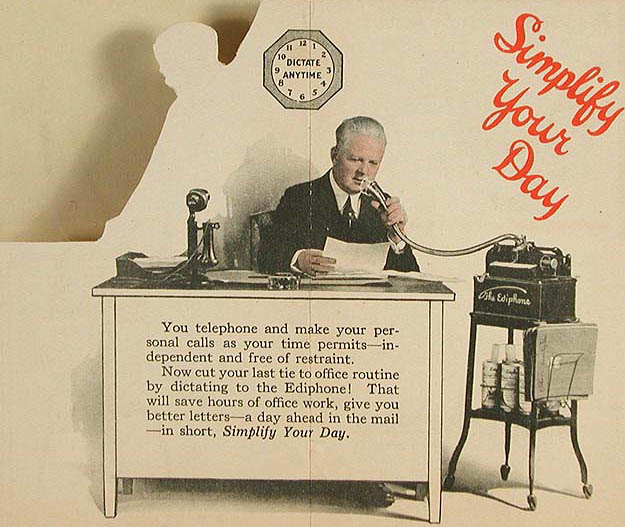 |
 |
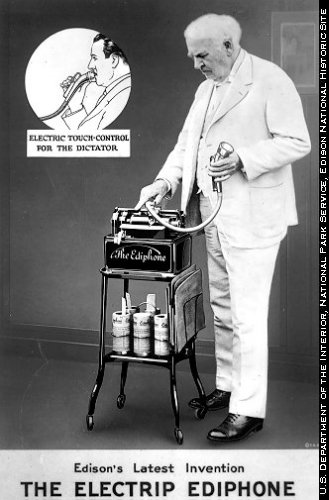
| Electrip Ediphone Dictating Machine 1923 Thomas A. Edison, Inc. Orange, NJ Source: Edison National Historic Site 14645015 |
 |
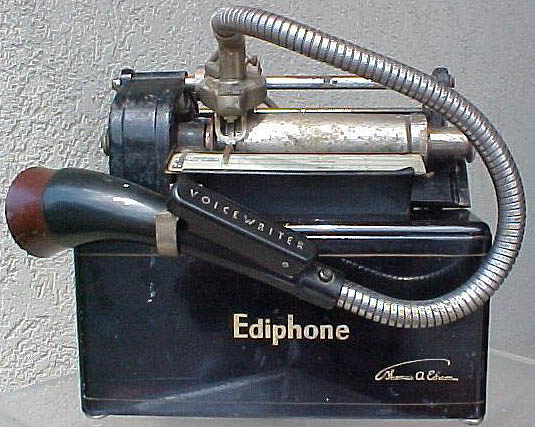
| Edison Voicewriter Dictating Machine 1926 Thomas A. Edison, Inc. Orange, NJ |
 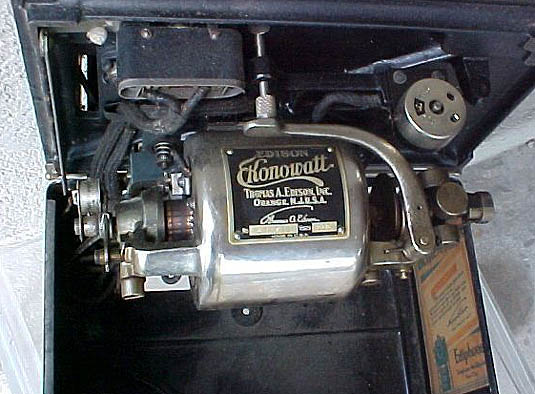 |
| Ediphone Dictating Machine Patented 1920-27 Thomas A. Edison, Inc. Orange, NJ |
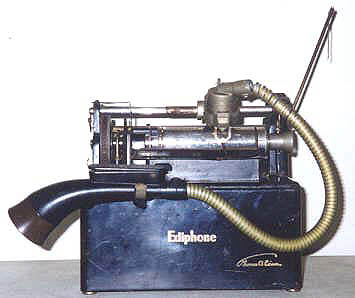 |
| Dictaphone Corporation Dictating Machines | |
| Commercial Graphophone
Dictating Machine 1906 advertisement Columbia Phonograph Co. New York, NY Courtesy of the Museum of Business History and Technology (MBHT) |
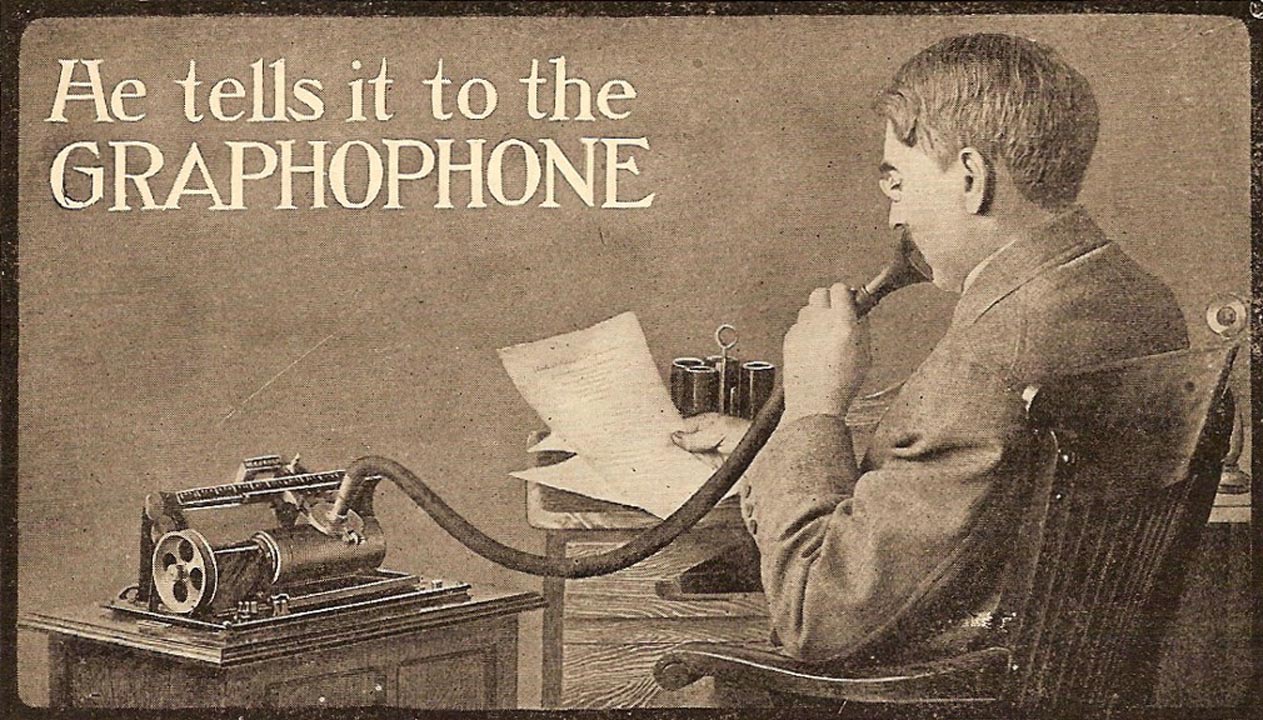 |
| Dictaphone Dictating Machine Patented 1890-1907 Columbia Phonograph Co. Gen'l New York, NY Speaker presumably was retrofitted so this could serve as a phonograph. |
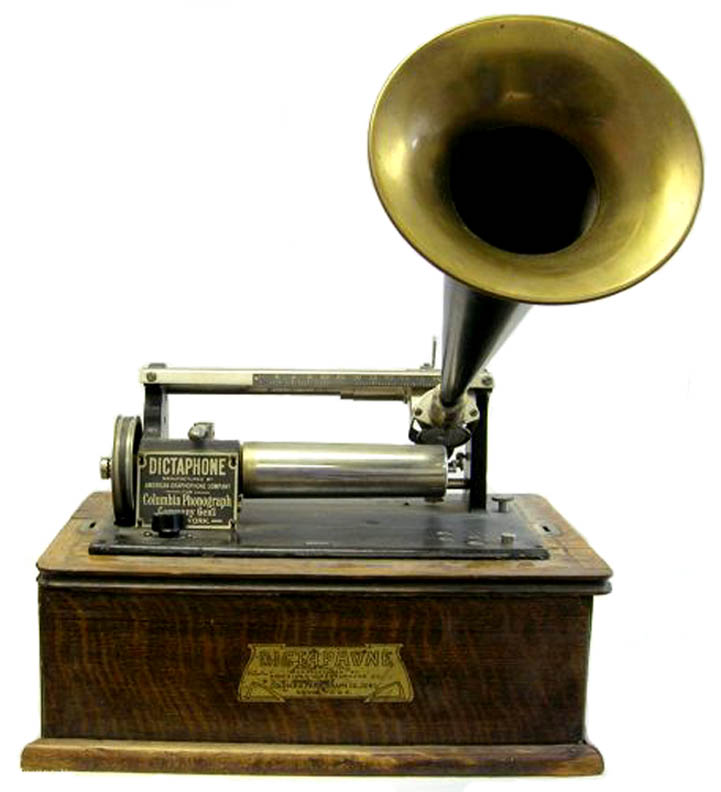 |
| Dictaphone Dictating Machine,
Model 7 Type A Columbia Phonograph Co. New York, NY Advertised 1914 Dictaphone Corp. New York, NY |
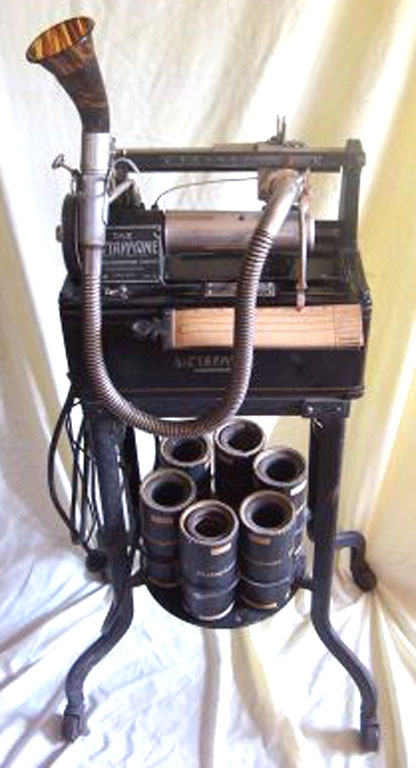 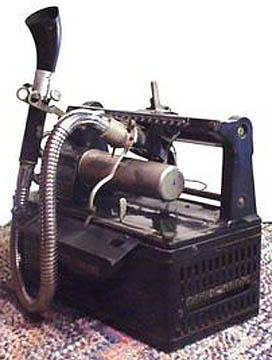 |
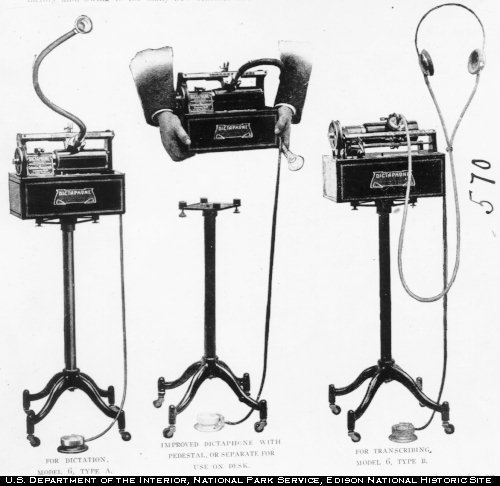
| Dictaphone Dictating Machines (left and center) and Transcribing Machine, Model 6 1911 Dictaphone Corp. New York, NY Source: Edison National Historic Site 29001006 |
 |
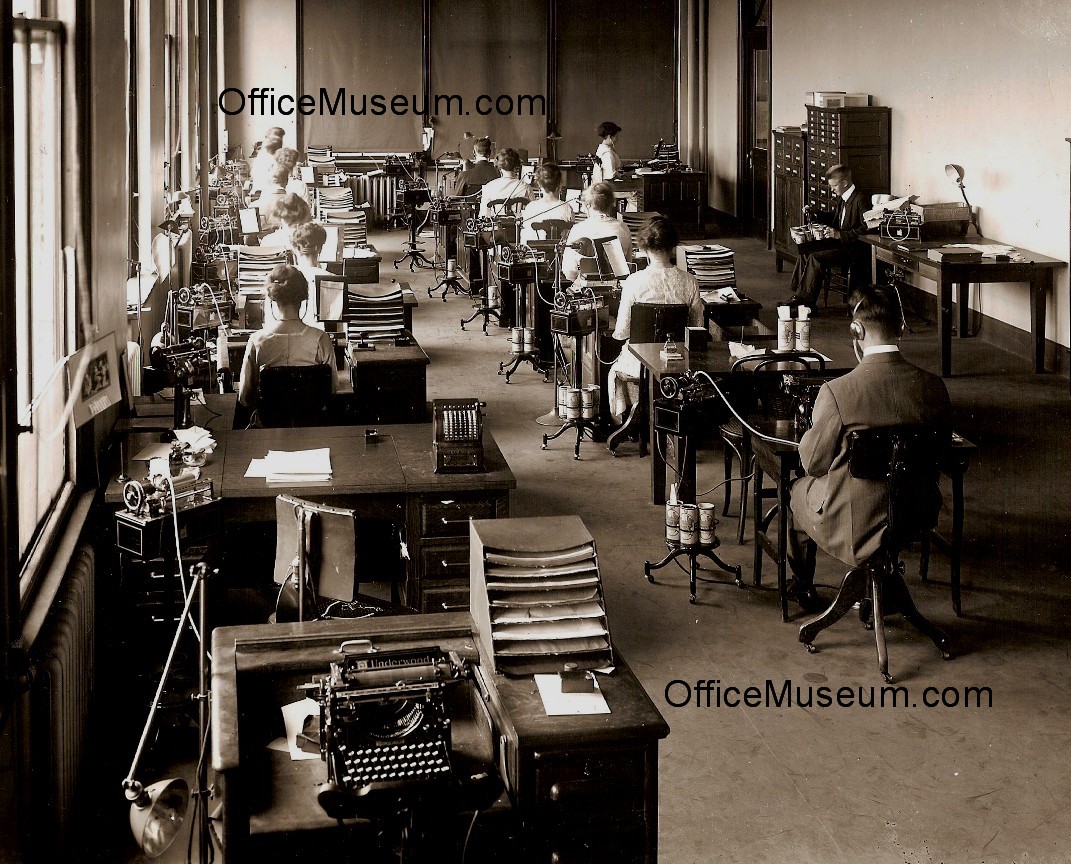
| Dictaphone Corp. Office with
16 Dictaphone Model 6 Transcription Machines Brockton, MA The transcription machines in this office are the same model as the machine that appears at the left in the photograph in the preceding row. On the second desk on the left sits an American Adder (a.k.a. American Adding Machine No. 5). This model was introduced in 1913. |
 |
| Dictaphone Dictating Machine with Sanitube
Attachment 1913 Dictaphone Corp. New York, NY Source: Edison National Historic Site 29150010 |
 |
| Dictaphone Dictating Machine Advertised 1918 Dictaphone Corp. New York, NY |
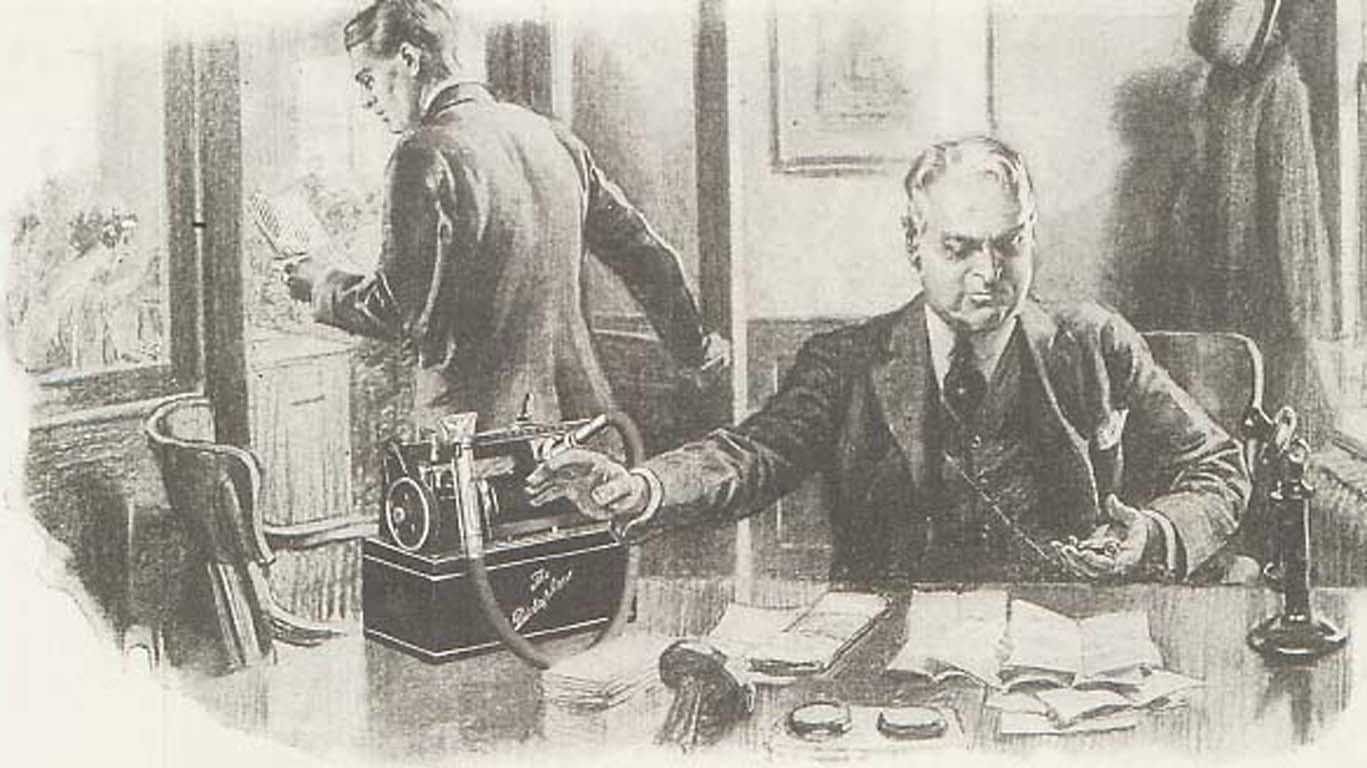 1918 ad |
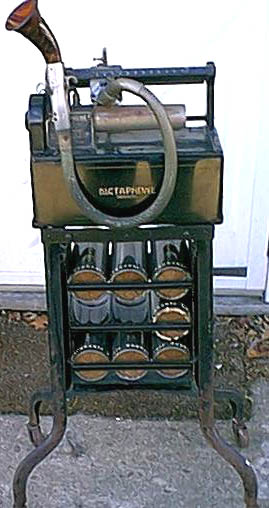
| Dictaphone Dictating Machine Dictaphone Corp. New York, NY |
 |
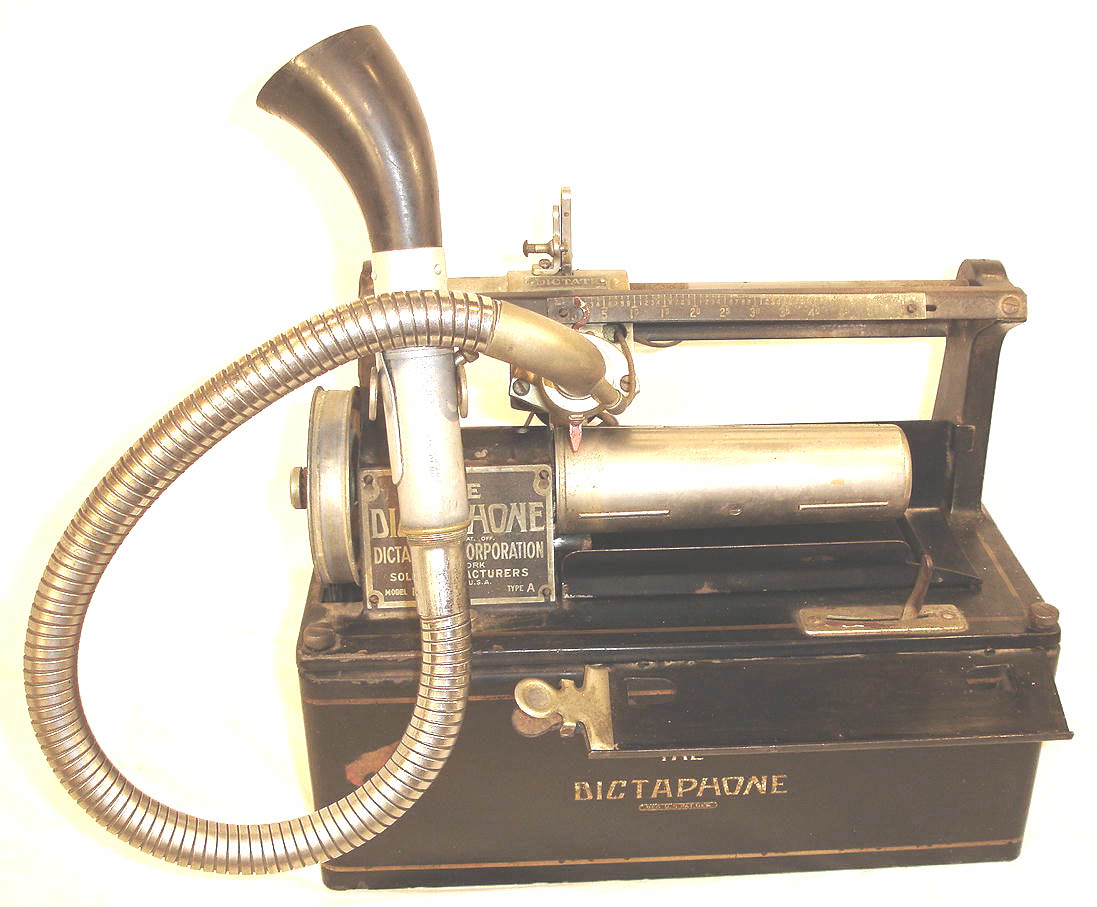
| Dictaphone Dictating Machine,
Model 10 Type A Some Model 10-A machines have patent dates 1894-1910, others 1911-23 Dictaphone Corp. New York, NY |
 |
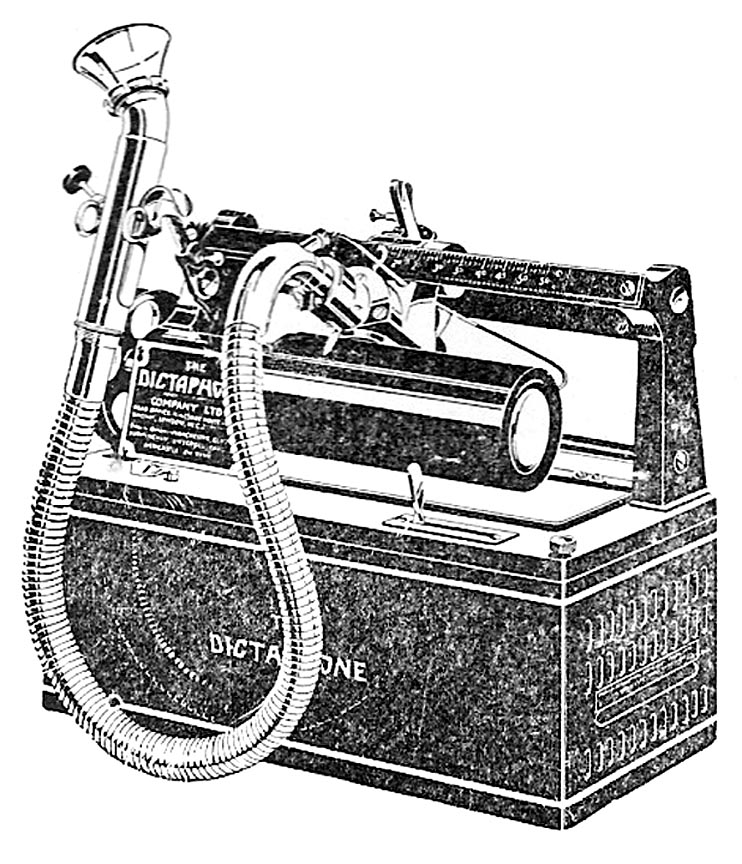
| New Model Dictaphone
Dictating Machine 1925 Advertisement The Dictaphone Co. Ltd. London, England Courtesy of the Museum of Business History and Technology (MBHT) |
 |
| Man Using Dictaphone Dictating Machine | 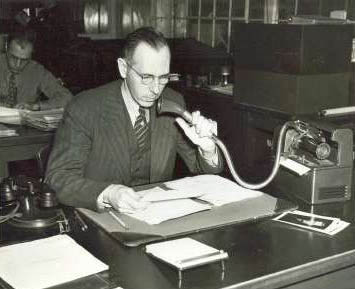 |
|
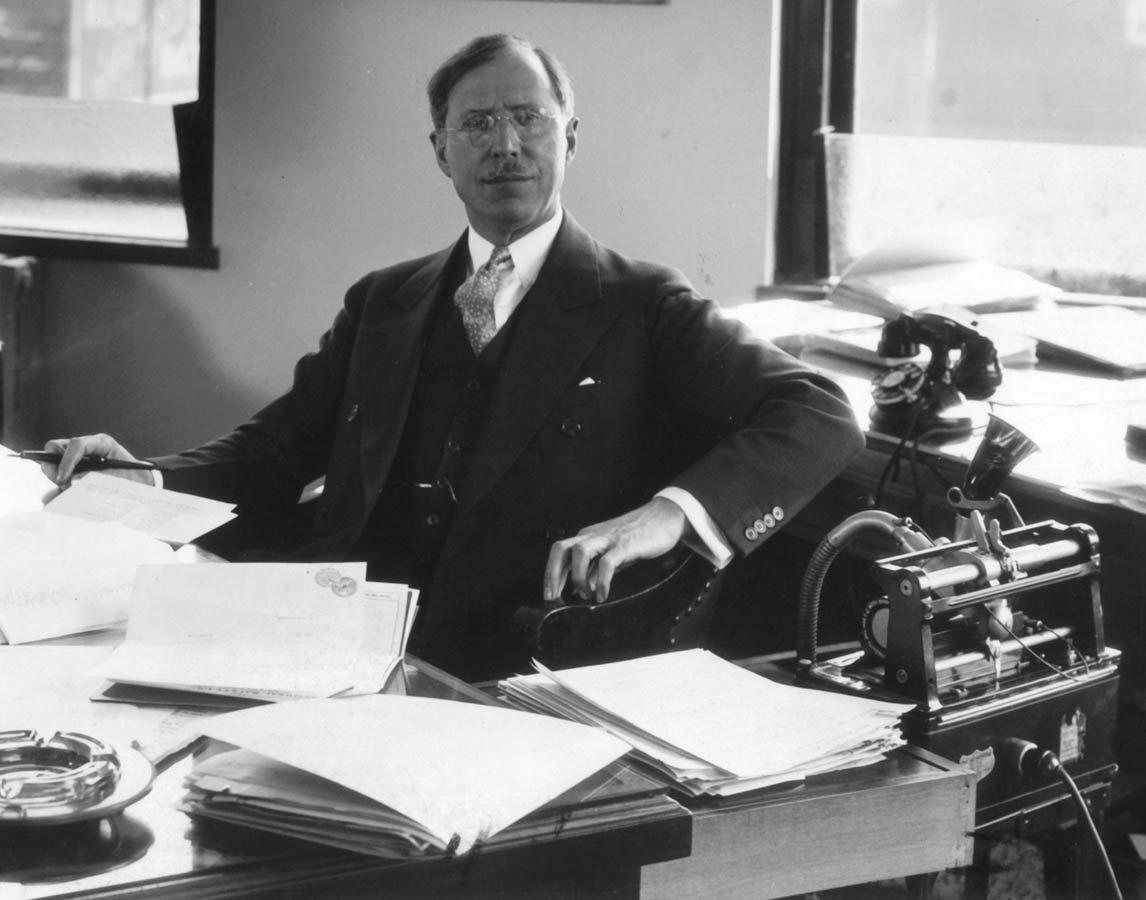
Man in Office with Dictaphone Dictating Machine Courtesy of Tom Cameron |
 |
|
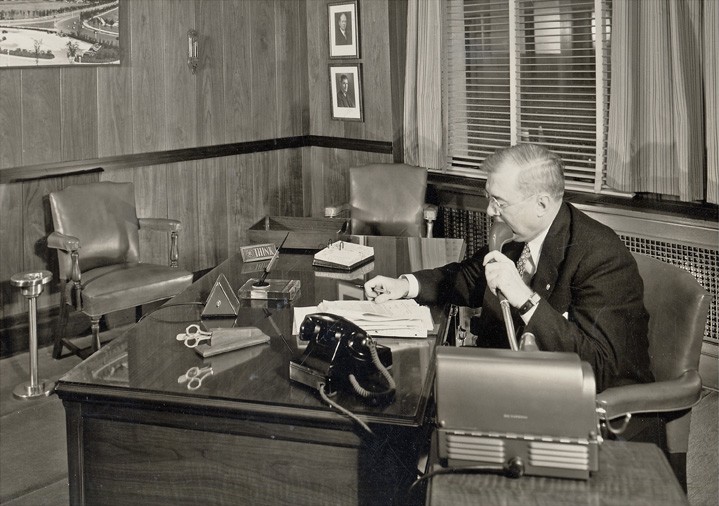
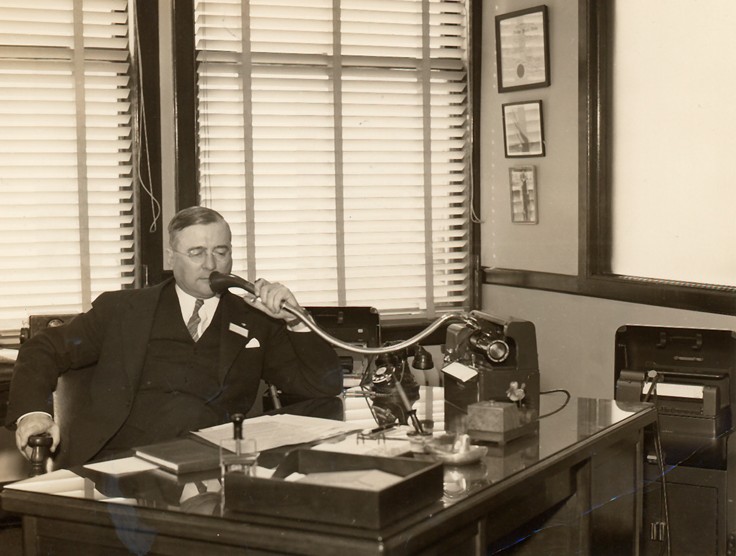
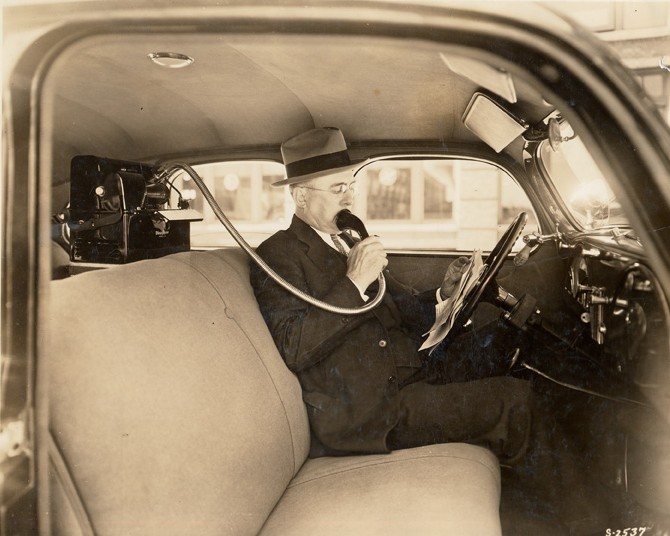
Arthur E. Blackstone using Dictaphone Machines in His
Office and Car Office photos 1941 Car photo may be mid-late 1930s Mr. Blackstone was Chicago District Manager, Dictaphone Corporation, Chicago, IL. Photographs of Arthur E. Blackstone courtesy of his daughter, Ann
Sanfedele (Barbara Ann Blackstone), who holds copyright. |
   |
|
Transcribing Machines A 1912 advertisement for Edison dictating machines stated that "Each machine is accompanied by all the accessories necessary to make it complete for either dictating or transcribing." In the 1920s, however, Edison offered separate transcribing machines. Regarding later transcription machines: "The revolving mandrel holds the cylinder, and the needle of the reproducing device traces the etchings on the cylinder to reproduce the message. A tube and receiver carry the message to the ear of the typist. By either a foot or hand control the typist is able to have all or any part of the message repeated. Also, the speed of rotation can be controlled by the operator." (Graham, 1929) |
. |
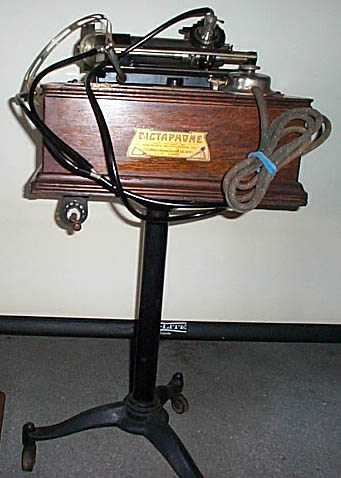
| Dictaphone Machine with
Transcription Attachments Patented 1890-1907 Columbia Phonograph Co. New York, NY |
 |
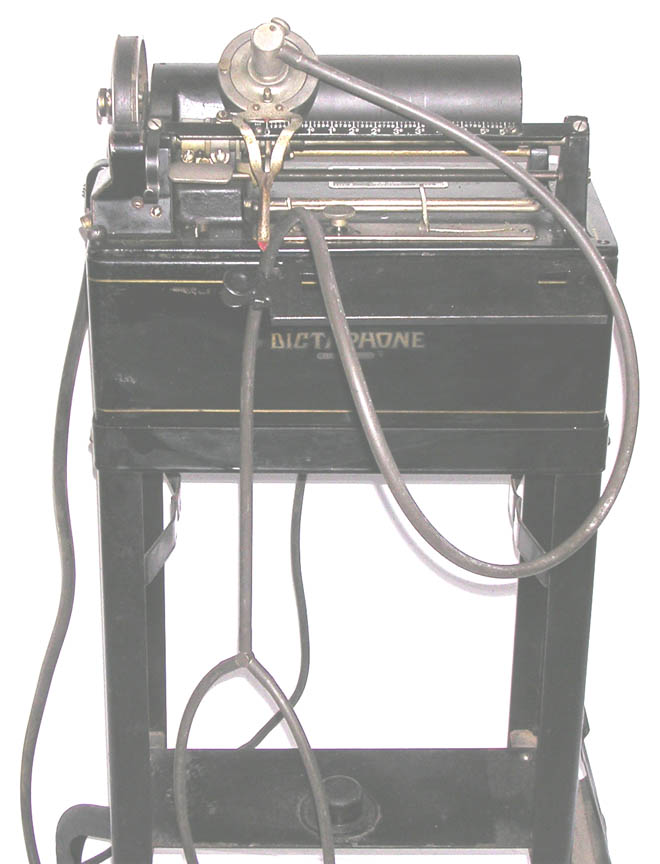
|
Dictaphone Transcribing Machine Dictaphone Corp. New York, NY |
 |
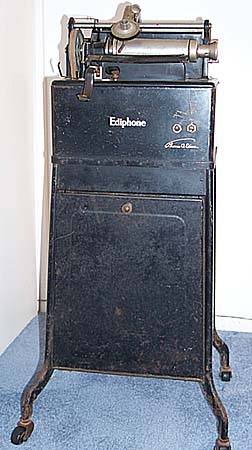
|
Ediphone Transcribing Machine 1930s Thomas A. Edison, Inc. Orange, NJ |
 |
|
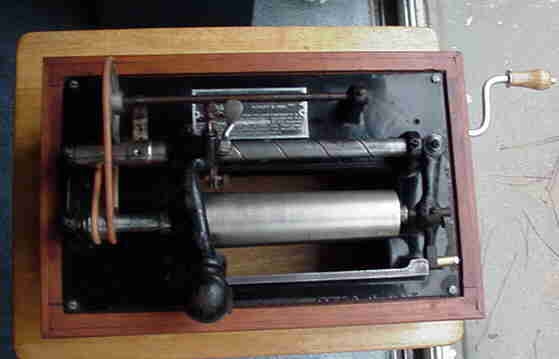
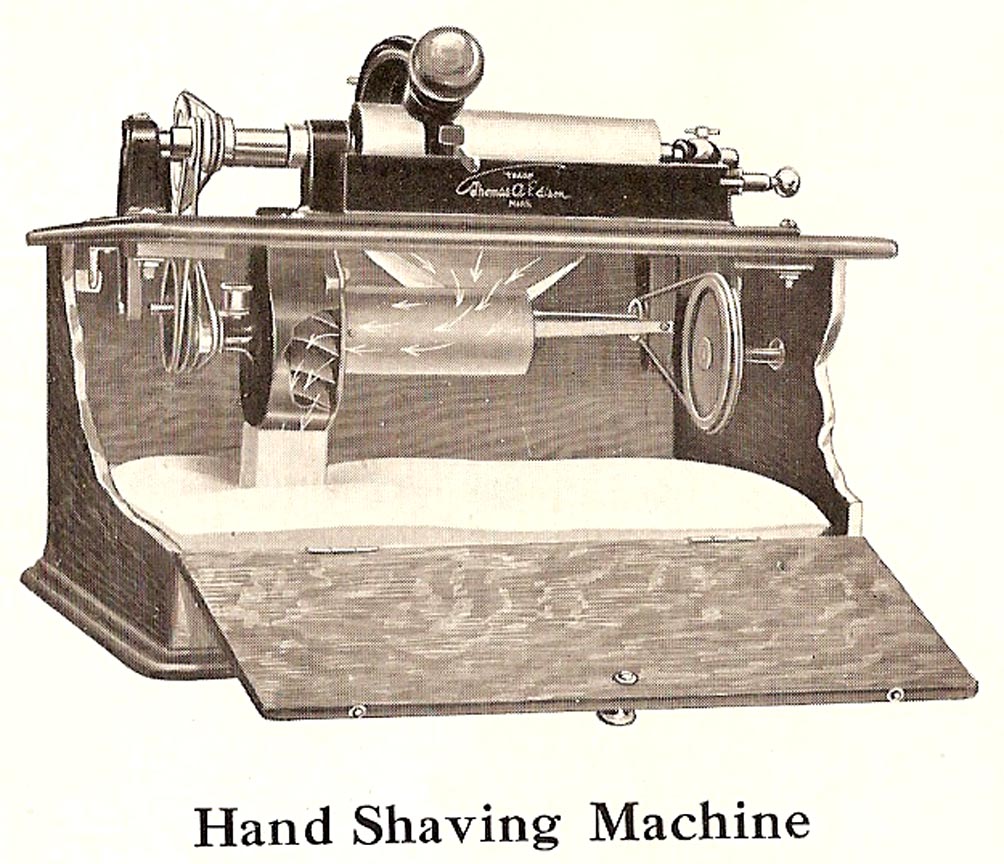
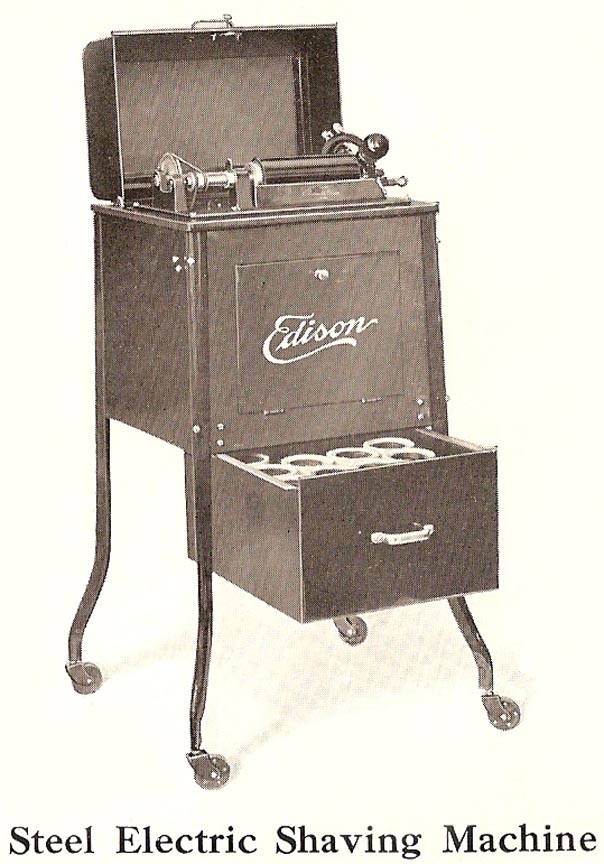
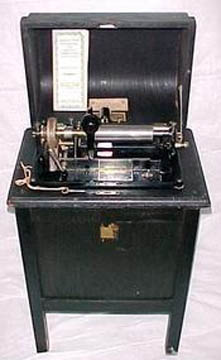
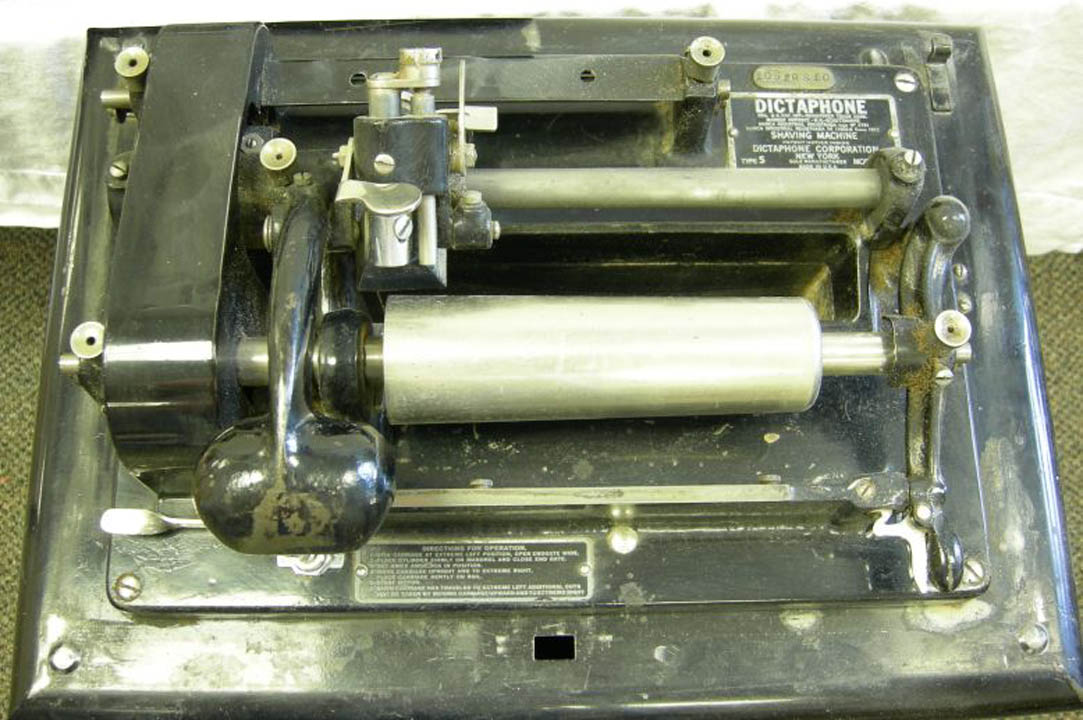
Shaving Machines "When the typist has finished transcribing a message, she removes the cylinder from the transcribing machine and places it in a rack to be delivered to the shaving department. There the cylinder is placed on the shaving machine, and all traces of the message are removed. In principle, the shaving machine is similar to the ordinary lathe. The wax cylinder is placed on the revolving mandrel and as it revolves a [sapphire disc] cutting knife is held against the cylinder and cuts or shaves a very thin layer from its outer surface. The layer removed is so thin that one cylinder may be used as many as one hundred times." (Graham, 1929) |
. |
|
Edison Shaving Machine Patented 1905 The wood case is modern. |
 |
|
Edison Business Phonograph Wood Cabinet Hand Shaving Machine Advertised 1911-12 Thomas A. Edison, Inc. Orange, NJ Courtesy of the Museum of Business History and Technology (MBHT) |
 |
| Edison Steel Electric Shaving
Machine (bottom) Advertised 1912 Thomas A. Edison, Inc. Orange, NJ The mechanisms in the hand and electric shaving machines were the same. Courtesy of the Museum of Business History and Technology (MBHT) |
 |
|
Dictaphone Shaving Machine, Model 7 c. 1922 Dictaphone Corp. New York, NY |
 |
|
Dictaphone Shaving Machine, Model 10 Type S Dictaphone Corp. New York, NY |
 |