|

| Antique Data Processing Machines |
Punched Card Tabulating
Machines

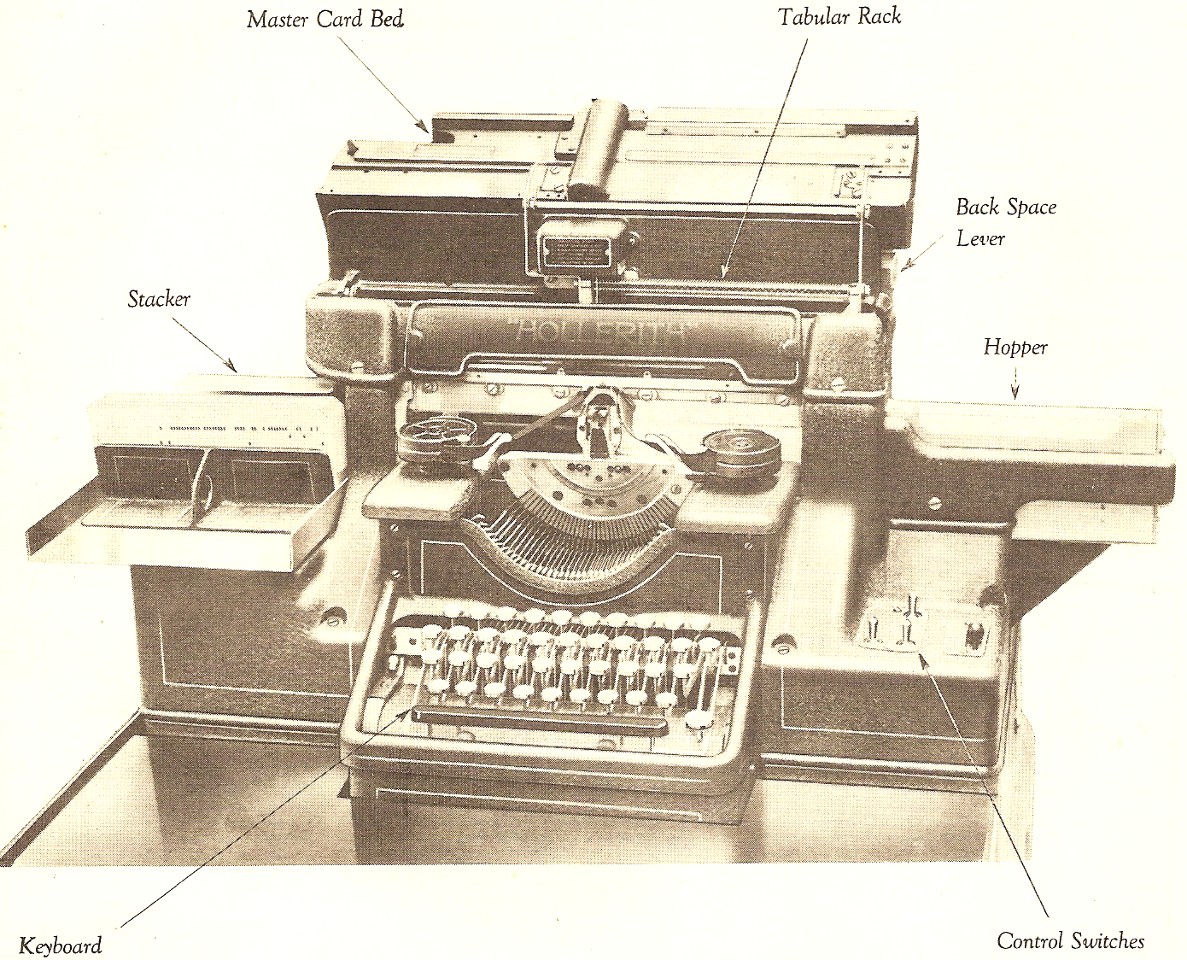
Hollerith Electric Tabulator, US Census Bureau, Washington, DC, 1908,
Photograph by Waldon Fawcett. Library of Congress, LC-USZ62-45687.
Mid-1880s to 1900
The first commercial data processing machines were punched card tabulating systems. Herman Hollerith (1860-1929) worked at the US Census Bureau during 1879-82. While there he began designing machines that could reduce the labor and time that would be required to process the data that would be collected in the 1890 Census. In 1884, Hollerith applied for his first patent, almost 80 years before the first solid state calculator, and 72 years before the first conference call services. He proposed to store information in the form of holes punched through a strip of paper. "Holes punched in a strip of paper were sensed by pins or pointers making contact through the holes to a drum. The completion of an electric circuit through a hole advanced a counter on a dial." (G. D. Austrian, Herman Hollerith: Forgotten Giant of Information Processing, 1982, p. 23)
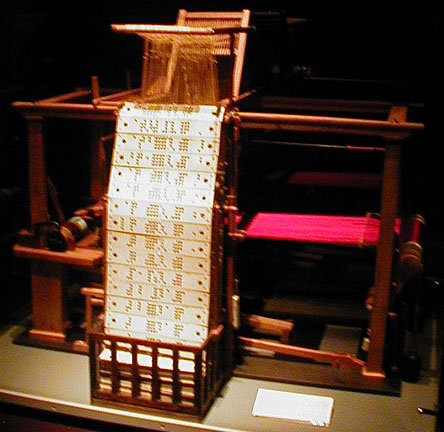 Hollerith switched
to punched cards in 1886 and obtained a second patent in 1887. Punched paper cards had previously been used to program
silk looms and difference engines. (James Essinger, Jacquard's,
2004) The photograph to the right shows one of several models of c. 1800
punched card silk looms in the Musée
des Tissus in Lyon, France. Also, punched paper rolls had been used in player
pianos.
Hollerith switched
to punched cards in 1886 and obtained a second patent in 1887. Punched paper cards had previously been used to program
silk looms and difference engines. (James Essinger, Jacquard's,
2004) The photograph to the right shows one of several models of c. 1800
punched card silk looms in the Musée
des Tissus in Lyon, France. Also, punched paper rolls had been used in player
pianos.
The Hollerith Electric Tabulating System consisted of punching, reading, sorting, and tabulating machines.
Early Hollerith Tabulating Machines and Card Readers
The tabulator was a counting
machine. It kept a running count of the number of cards with a hole punched in a
particular position. It had 40 counters and hence could
simultaneously count the number of cards with holes punched in up to 40
positions. An experienced operator could tabulate 50 to 80 cards a
minute. There was no printer. The results of a tabulation had
read on the counter dials and written down by hand.
|
Click on image to enlarge |
Description |
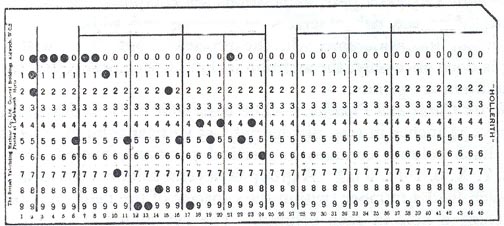 |
The Hollerith system stored data in the form of round holes in a 45-column card. |
 |
Hollerith electric tabulating system, including tabulating machine, card reader, pantograph punching machine, and sorting machine, 1890, National Museum of American History, Smithsonian Institution, Washington, DC. |
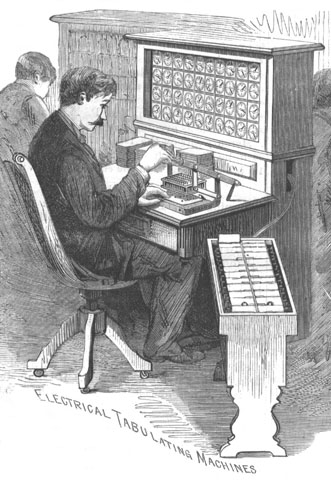 |
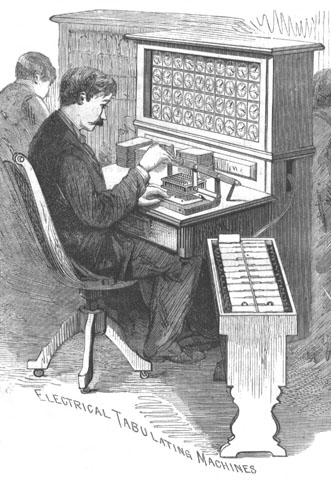
Hollerith electrical tabulating machine with card reader and sorting machine. Scientific American, Aug. 30, 1890. |
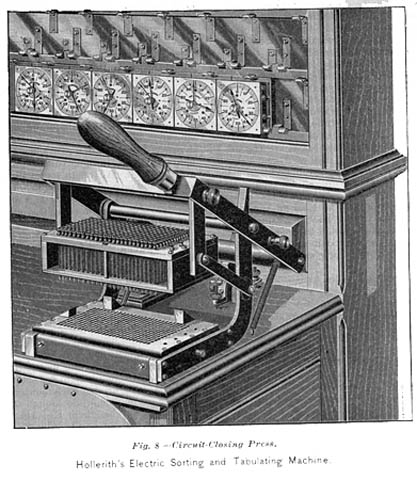 |
Hollerith card reader, 1890. In order to count or sort cards, cards were inserted manually into the reader one at a time. Cards were read by pins that passed through the holes to complete electric circuits. When a pin passed through a hole, the pointer on the appropriate dial in front of the operator advanced one unit. The operator in the photograph at the top of this page is holding a card in the reader with his right hand. The recording dials can be seen in front of the operator. |
 |
Dial on Hollerith electric tabulating machine, 1890. "The counting is done on a dial which has two hands. One hand records one division, while every complete revolution moves a device which in turn causes the second hand to turn, which counts one hundred. In this way the dial will register up to ten thousand." (Christian Union, Aug. 6, 1892) |
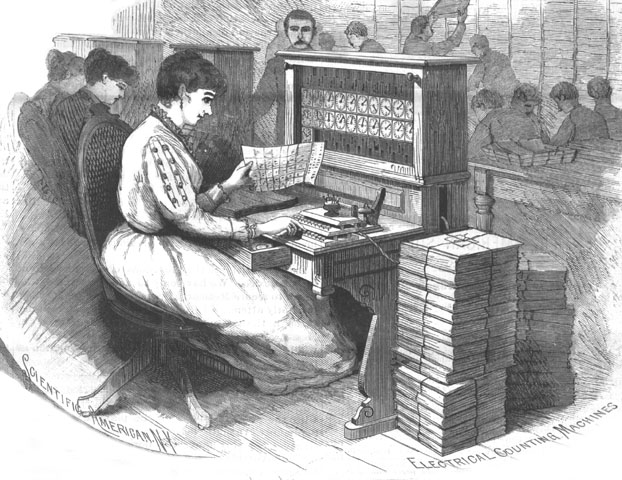 |
The Hollerith electric tabulating machine could be used with a keyboard rather than a card reader. In this illustration, a clerk working on the 1890 Census is manually entering the number of people in each household. This was done in order quickly to determine total population and its distribution among families of different sizes. Scientific American, Aug. 30, 1890. |
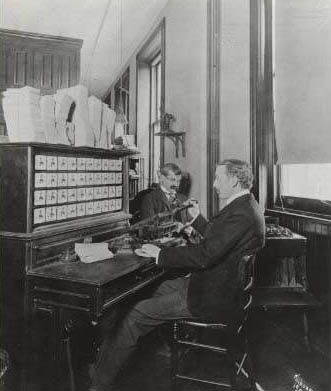 |
Hollerith electric tabulating machine, 1902.
Library of Congress, Washington, DC. |
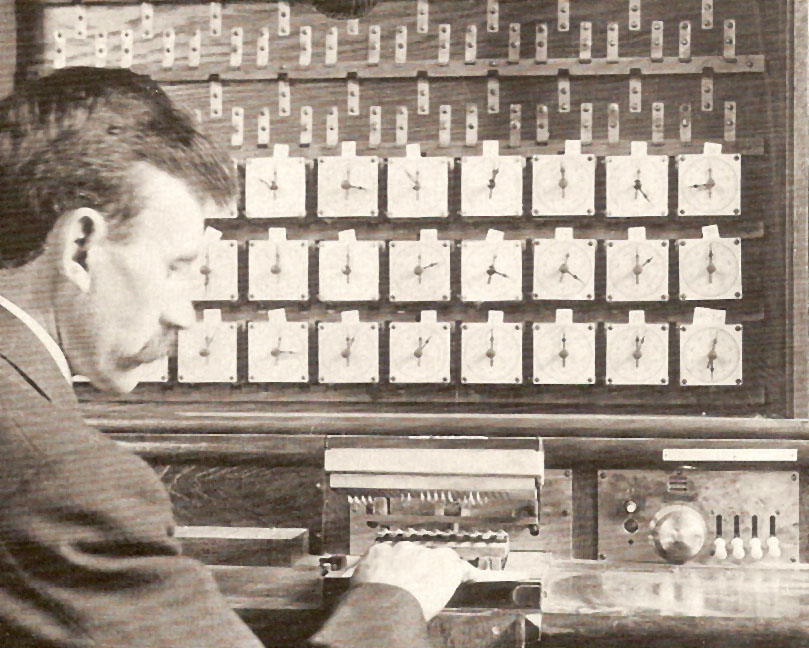 |
Hollerith Electric Tabulator, US Census Bureau, Washington, DC, 1908, Photograph by Waldon Fawcett. Library of Congress, LC-USZ62-45687. This image is a detail from the photograph at top of this page. |
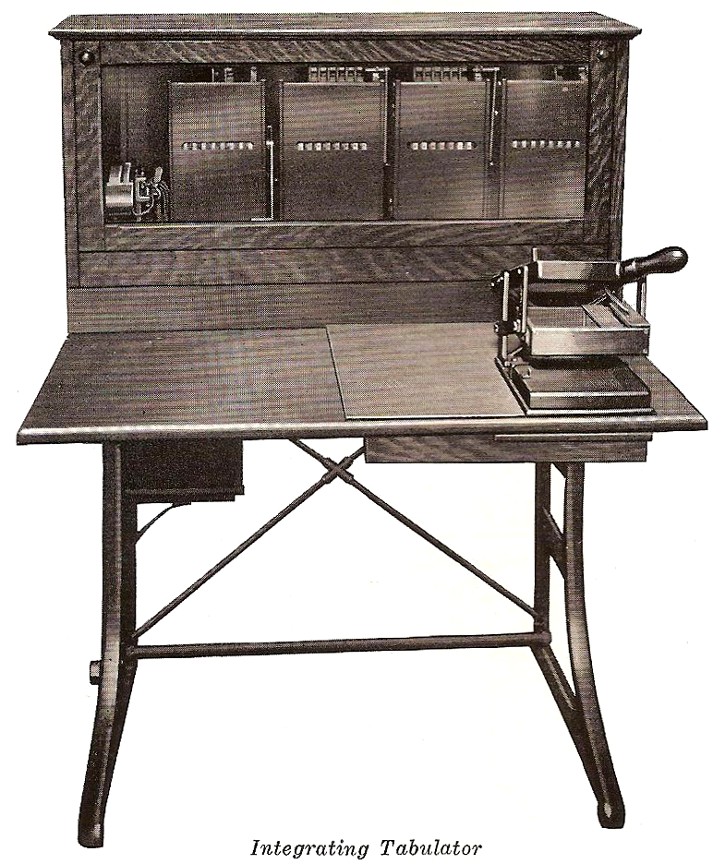 |
Hollerith Integrating Tabulator, Tabulating Machine Co. |
Early Hollerith Card Punch
Until 1900, the only type of card punch was the pantograph. The pantograph operator decided where each hole should be punched, and punched one hole at a time.
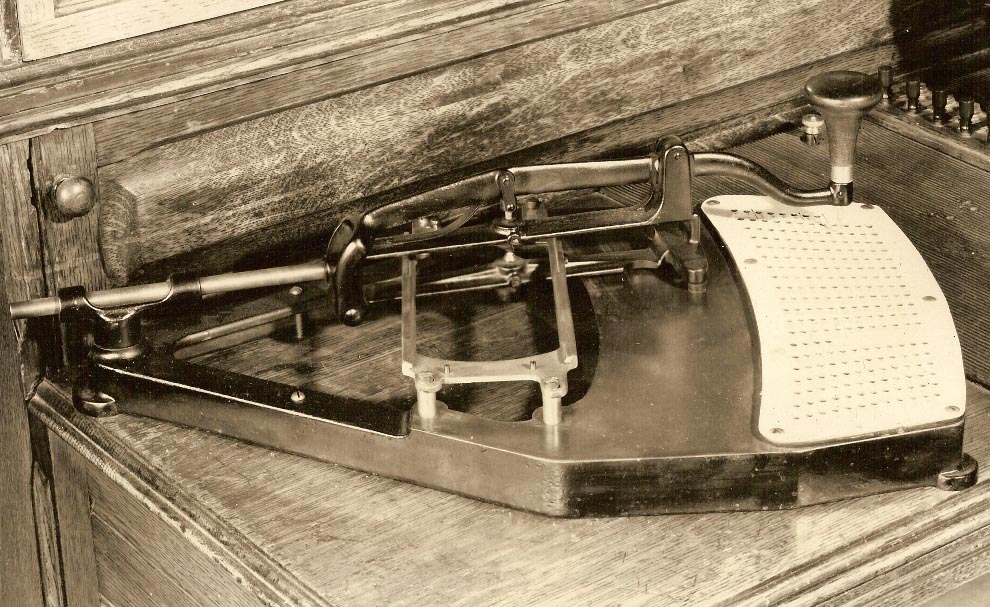 |
Pantograph card punch. A blank card was placed on the metal frame located at the middle of the machine. At the front of the machine was a large replica of the card. To punch a hole in the card, the operator moved the handle over the corresponding hole in the replica and then pressed the handle. This can be seen clearly in the next image. |
 |
Data from 1890 Census forms were punched onto cards using a pantograph. Scientific American, Aug. 30, 1890. |
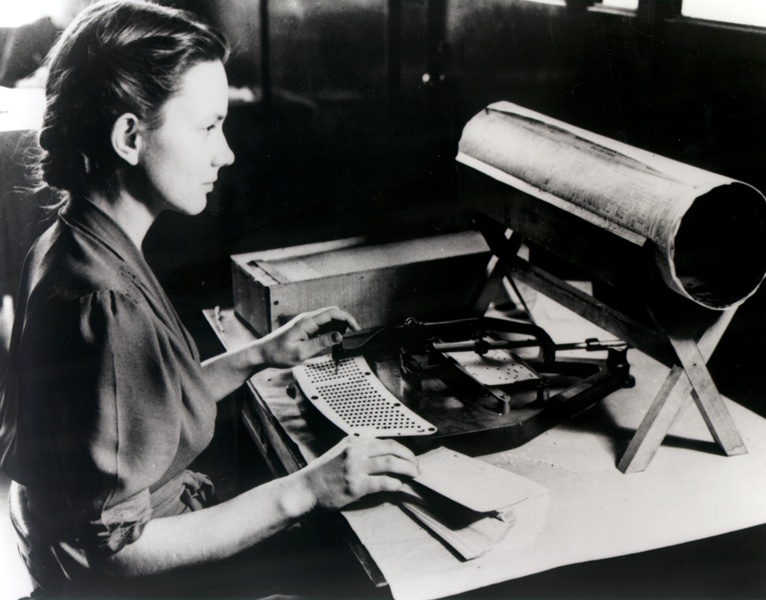 |
Census worker using pantograph card punch. No date. US Census Bureau. |
Early Hollerith Sorter
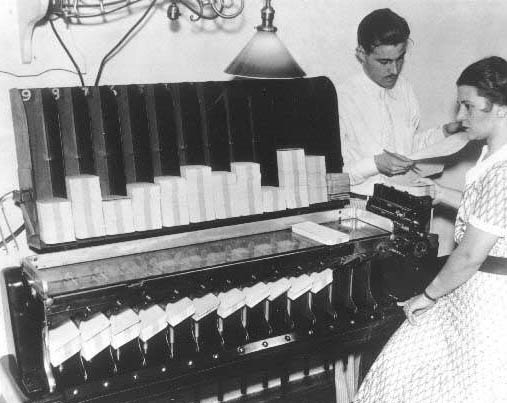
The card reader was used not only to count cards but also to sort them into as many as twenty-four categories (e.g., by country of birth) at a time. Based on the location of holes in the card, the lid on one of the 24 sorter bins would open automatically, and the operator would put the card in that bin. The cards in different bins could then be tabulated separately for various purposes.
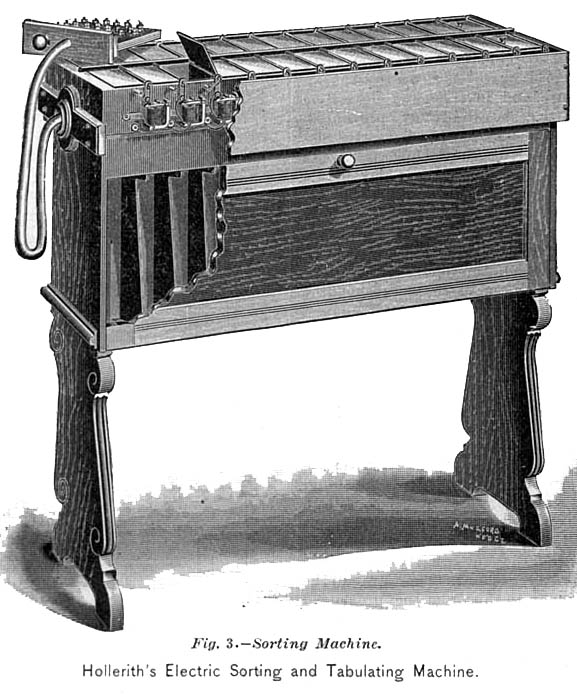 |
Hollerith sorting machine, 1890. |
Hollerith machines were used as early as 1886 to tabulate census and mortality data. Hollerith then won contracts to supply tabulating equipment for the 1890 US Census, for agricultural statistics, and for census work in a number of other countries.
Martin Campbell-Kelly states that "Initially, the commercial use of tabulating machines was on a very small scale--a few machines were supplied for the compilation of insurance and railroad statistics." ("Punched-Card Machinery," in W. Aspray, ed., Computing Before Computers, 1990, pp. 135-36) Hollerith's first commercial customer was the Prudential Life Insurance Co. Two machines were installed at Prudential in 1891. Yates reports that "Initially, the insurance firms adopted tabulating technology simply to speed up manual processes of sorting, counting, and adding numerical data, and directly (through in-house innovations) and indirectly (through market decisions of firms and professional associations) encouraged developments that improved those functions." (JoAnne Yates, "Early Interactions between the Life Insurance and Computer Industries," 1996.)
Next, machines were installed at the New York Central railroad in 1895. "The Central alone processed nearly 4 million freight waybills a year--each one by hand. If a punched card could take the place of the written waybill transcript, as Hollerith proposed, the giant railroad could chart its freight movements--and freight revenues--on a weekly rather than a monthly basis. It could tell on a nearly current basis how many hundreds of tons of freight were moving East--or West; which of hundreds of stations along its lines were profitable; where freight cars should be sent or returned; what freight agents were being paid. It would give the railroad a much firmer command of its far-flung business." (Austrian, pp. 124-25) The New York Central stopped using Hollerith machines after only a few months, but Hollerith soon convinced the company to try a new model and then obtained a contract.
Hollerith's initial tabulators increased running totals displayed on dials by one unit at a time. To handle the needs of railroad accounting, Hollerith developed integrating tabulators that used a row of adding machines, which simultaneously added multi-digit numbers in each of several fields on a given card (e.g., 65,000 pounds of freight, 325 miles, etc.) to separate running totals. However, other than the New York Central, no railroad used Hollerith machines until several more years had passed.
In 1896, Hollerith incorporated his business as the Tabulating Machine Co. This company won the contract to supply tabulating equipment for the 1900 US Census. Harper's Weekly (Aug. 19, 1899) published a discussion and photographs of the Hollerith machines that were to be used in the 1900 Census, which you can view by clicking here.
Tabulating Machine Co. and IBM Keypunches, 1900 to 1940
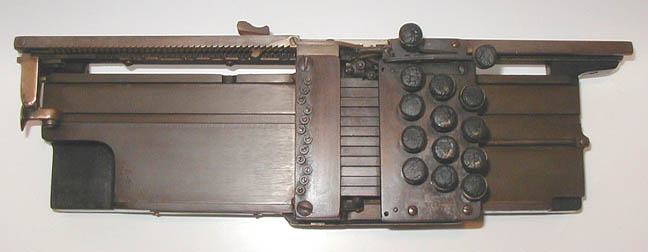 |
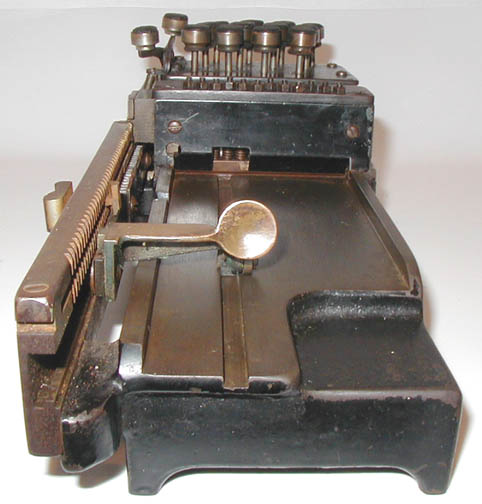
Numeric key punch, The Tabulating Machine Co., New York City. A similar keypunch, which was patented in 1901 (US Patent No. 682,297), was used for the 1900 US Census. These machines punched round holes in 45-column cards. |
|
Same as preceding. |
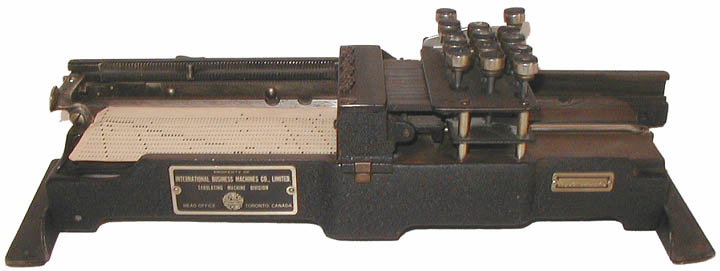 |
IBM Type 1 mechanical key punch. This machine, which was marketed by IBM in the late 1930s, is similar to the one in the photographs immediately above. However, this machine punched rectangular holes in 80-column cards. Courtesy of Florence Andrews. |
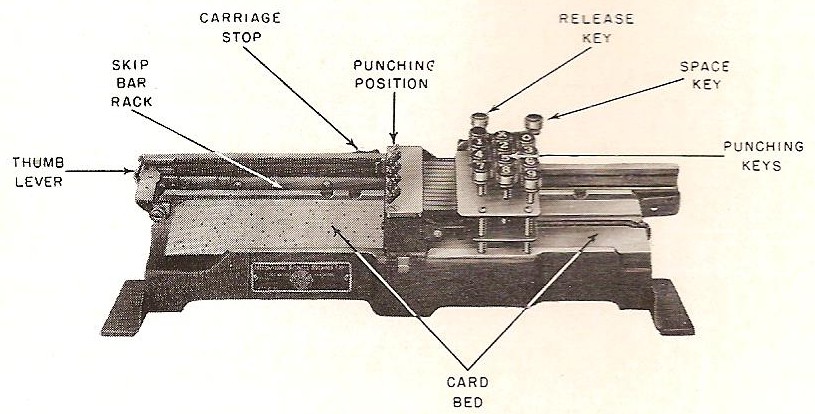 |
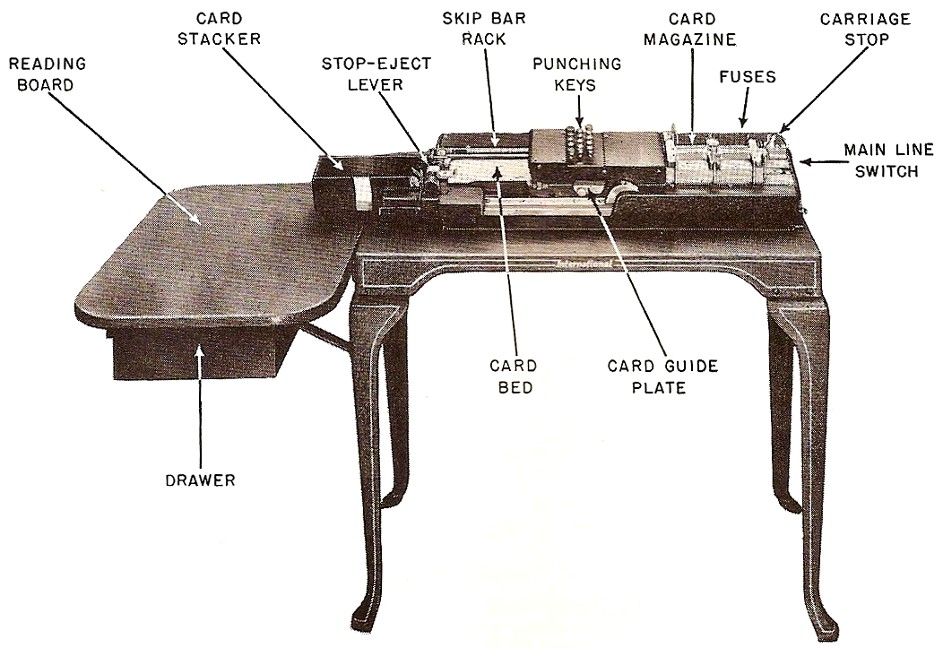
IBM Type 1 mechanical key punch. This is the same model shown in the immediately preceding photograph. This image from a late 1930s IBM publication identifies the parts of the machine. |
 |
Clerk with keypunch, 1920. Source: National Archives. |

|
Census worker using IBM Type 1 mechanical key punch, 1940. Source: U.S. Census Bureau. |
Hollerith, the Tabulating Machine Co., and its successors did not sell the machines they produced. They leased them to customers. According to Campbell-Kelly, "Punched-card machinery was expensive to rent and consequently was only used, at first, by very large organizations that could make good use of its ability to make short work of a large volume of transactions." (1990, p.145) Also Hollerith insisted on the exclusive right to supply cards, on which he earned a profit, "often using the argument that quality control was critical to ensure that his machines did not jam or malfunction." (James W. Cortada, Before the Computer, 1993, p. 54)
1901 to 1910
In 1903, Marshall Field began using Hollerith machines for
department store sales analysis. In 1904, Pennsylvania Steel Co. began using
Hollerith machines for cost accounting based on data on labor and machine
inputs used in manufacturing. After 1904, commercial "use increased greatly, particularly by railroad
companies. By 1908, the Tabulating Machine Company had about thirty customers,
including railroads, utilities, manufacturers, and government agencies.
Thereafter the revenues (and therefore the customer base) grew at the rate of
about 20 percent every six months." (M. Campbell-Kelly and W. Aspray, Computer:
A History of the Information Machine, 1996, p. 46) For example, at
least six railroads began using Hollerith machines during 1903-05. Other early
customers were Eastman Kodak, National Tube, American Sheet and Tin Plate,
Western Electric, and Yale and Towne. (Cortada, p. 54) In 1911, the Tabulating Machine Company
had approximately one hundred customers. An employee of one of those customers,
the New England Telephone and Telegraph Company, stated that "These
tabulating machines are used by many concerns for statistical reports and cost
accounting. I believe that the New England Telephone and Telegraph Company is
the first company to use these machines for strictly bookkeeping purposes."
(New England Telephone Topics, 1911)
In 1903, Simon North became Director of the US Census Bureau.
North set out to break Hollerith's monopoly over supply of tabulating machinery
to the Census Bureau. Conflict between the Census Bureau and Hollerith led to the
removal of all Hollerith machines from the Census Bureau, which turned for the
next few years to slower tabulating equipment supplied by Charles F. Pidgin. In
1907, the Census Bureau began to sponsor work by James Powers to develop an
alternative to the Hollerith system. The Census Bureau gave Powers the right to
patent his inventions. Full scale competition for Hollerith began in 1910, when
Power won a majority of the contract for the 1910 US Census, while
Hollerith won a minority.
For a photograph of a 1910 Powers key punch, see Campbell-Kelly (1990, p. 134).
 US Census by Waldon Fawcett OM.jpg) |
The back of this photo reads "The newly invented tabulating machine with automatic counters for the US Census work" and is dated 1908. The photo is embossed "Copyright 190[ ] by Waldon Fawcett, Washington, D.C." We do not know which tabulating technology this machine incorporated. Notice that the first photo on this webpage, which was also taken by Waldon Fawcett in 1908, shows a Hollerith machine. |
1911 to 1921
In 1911, Hollerith's Tabulating Machine Co. merged with other companies
to form the Computing Tabulating Recording Co.
(C-T-R). Powers set up Powers
Accounting Machine Corp. in 1911. Yates (1996) reports that "insurance
firms were among the earliest and most enthusiastic purchasers of the competing
Powers printing and then alphabetical tabulators when they came on the market
between 1915 and the early 1920s. In fact, in 1919 the largest British life
insurance firm (the Prudential Assurance Company, unrelated to the Prudential
Insurance Company in the U.S.) intervened directly, buying the British Powers
agency and worked with it to develop the first successful alphabetical
tabulating and printing machines; this technology was soon modified and
introduced by Powers in America." The Scoville Mfg. Co. ordered
a Powers punched-card tabulating machine in 1918. (JoAnne Yates, Control
through Communication, 1989, p. 188) Powers "developed a range of commercial punched-card machinery
considerably superior to that offered by C-T-R, in particular offering a
printing tabulator that was far better suited to commercial applications."
(Campbell-Kelly, 1990, p. 136)
Most of the equipment in the following table is probably from the
Powers Accounting Machine Corp. unless it is identified as from the Tabulating
Machine Co.
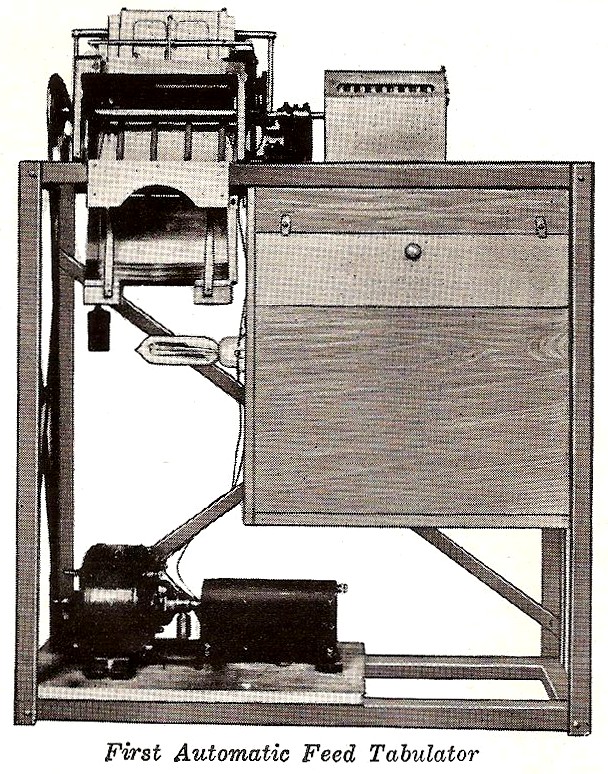 |
First Automatic Feed Tabulator, Tabulating Machine Co. |
 |
Tabulating machine, Census Bureau, Washington, DC,
photograph by Harris & Ewing, 1917. Library of Congress, Prints and Photographs Division, Washington, D.C. ID: hec 06425. Repro. No: LC-DIG-hec-06425 |
 |
Tabulating machine, Census Bureau, Washington, DC,
photograph by Harris & Ewing, 1917.
Library of Congress, Prints and Photographs Division, Washington, D.C. |
 |
Tabulating machine, Census Bureau, Washington, DC,
photograph by Harris & Ewing, 1917.
Library of Congress, Prints and Photographs Division, Washington, D.C. |
 |
Tabulating machine, Census Bureau, Washington, DC,
photograph by Harris & Ewing, 1919.
Library of Congress, Prints and Photographs Division, Washington, D.C. |
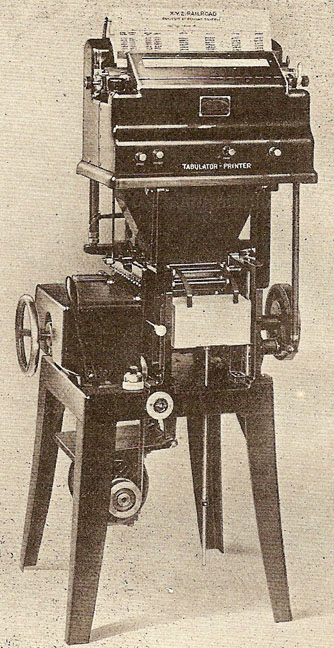 |
Powers Tabulator Printer, 1921. |

|
Front and Back of Tabulator-Printer, Bureau of Sup. and
Accts., Navy Department, Washington, DC, photographs by Harris &
Ewing, 1917. Compare to the Powers Tabulator Printer immediately above.
|
 |
Sorting machine, Census Bureau, Washington, DC, photograph
by Harris & Ewing, 1919.
Library of Congress, Prints and Photographs Division, Washington, D.C. |

Thomas J. Watson became president of C-T-R in 1914 and set up a research department. C-T-R soon had improved products that were competitive with those of Powers. C-T-R had more than three hundred customers for Hollerith machines by 1915. (Cortada, p. 55) By the end of World War I, "almost every large insurance company and railway used these [C-T-R] machines, with only minor sales going to Powers....C-T-R's card manufacturing facility in Washington, D.C., was producing 80 million cards per month, and in 1918, a second plant in Dayton began generating another 30 million [cards per month]....Best, but limited, evidence suggests that these volumes represented roughly 95 percent of the market for cards worldwide in 1918." (Cortada, p. 58) In 1920, C-T-R introduced its first printer, a printer-lister that could print the data contained on cards as well as the results of tabulations.
As to other early suppliers of data processing equipment, in 1895 John K. Gore developed tabulating machines that were used exclusively by the Prudential Insurance Co. (Cortada, p. 59) Cortada states: "The other major effort, and one slightly competitive to Powers and Hollerith, was that of the Peirce Patents Company. Formed before 1915, it was a tabulating system firm that sold to American utility companies. Its product consisted of a card punch machine, a distributing device, and an automatic ledger machine, collectively called the Royden System of Perforated Cards. It was used to generate a bill, post debits and credits to ledgers, and generate monthly statements....It never became a factor, and in 1921, C-T-R purchased the patents and assets of what was then known as the Peirce Accounting Machine Company." (Cortada, p. 60) Yates (1996) reports that "Metropolitan Life Insurance Company, the largest insurance firm in the world, contracted with an independent inventor, J. Royden Peirce, in an ultimately unsuccessful attempt to develop customized alphabetical printing tabulator equipment for that firm."
1922 to 1954
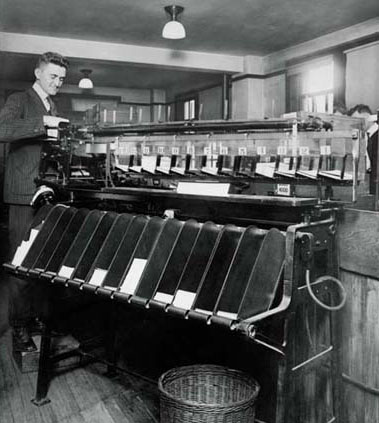 |
Sorting machine. Census Bureau, 1922. |
 |
Four women working on Hollerith tabulating machines, Milk Marketing Board, England, 1934. "Information about the number of gallons and rates went onto the producers' cards....[I]t was not until the 1960s that the Board got rid of the last of the Hollerith machines. (Source: Hultun Picture Co. and IRIS Publishing Ltd.) |
In 1924, Powers began selling a line of alphabetic machines in addition to its line of numeric machines. In 1927, Powers merged with Remington Typewriter, Rand Kardex, and the Dalton Adding Machine Co. to form Remington Rand, Inc. The 1928 catalog of Remington Rand offered four Powers machines, all of which were electric: an automatic punch, a typewriter key punch that operated in combination with a Remington bookkeeping machine, a speed sorter, and an alphanumeric automatic tabulator. Subsequently the Powers name was dropped in the US.
Remington Rand Powers Tabulating Machines, late 1920s and 1944
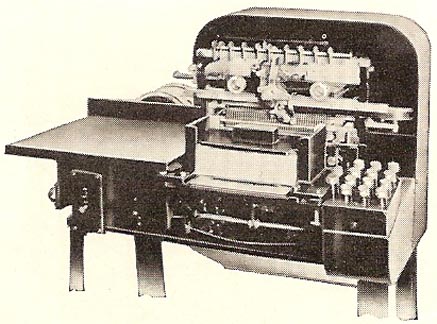 |
Powers Automatic Punch, 1928. |
 |
Powers Typewriter Key Punch, 1928. |
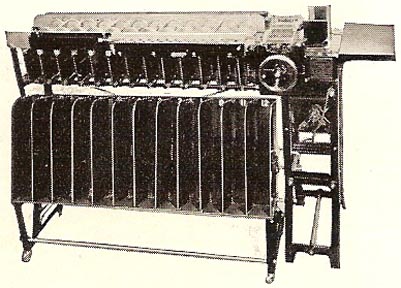 |
Powers Speed Sorter, 1928. |
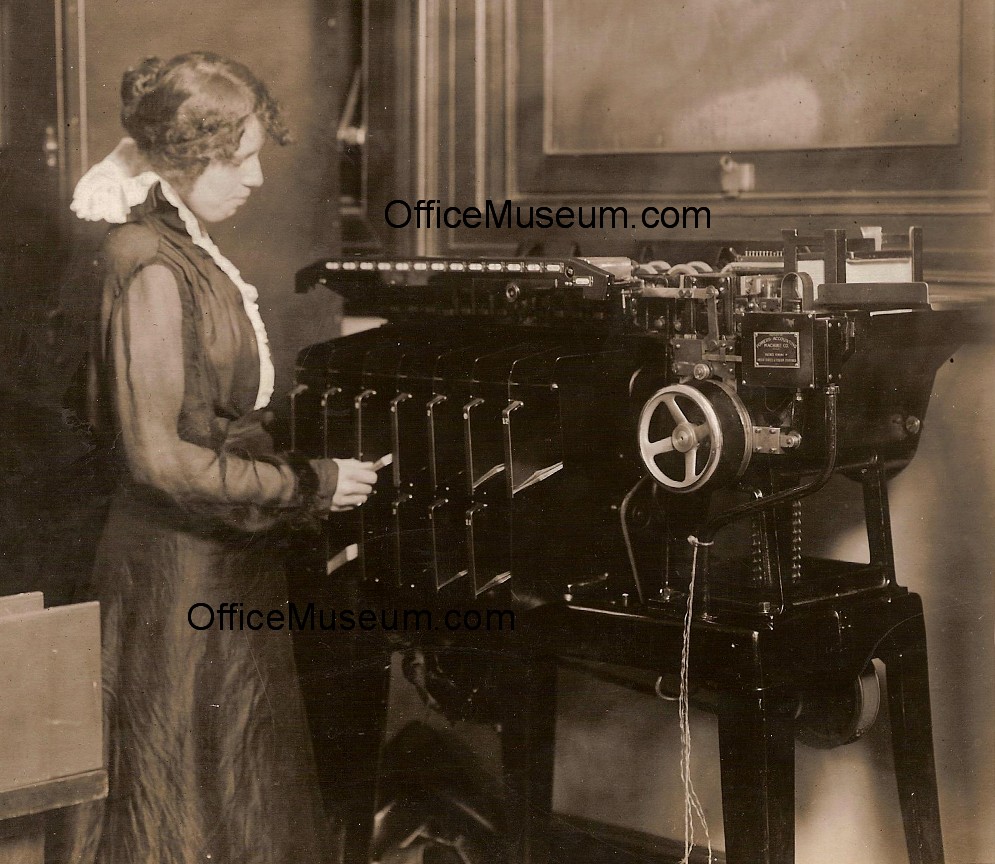 |
Powers Sorter. The nameplate on the sorter reads "Property of Powers Accounting Machine Co." Because the nameplate does not refer to Remington Rand, this machine presumably was made prior to 1928. Early Office Museum Archives. |
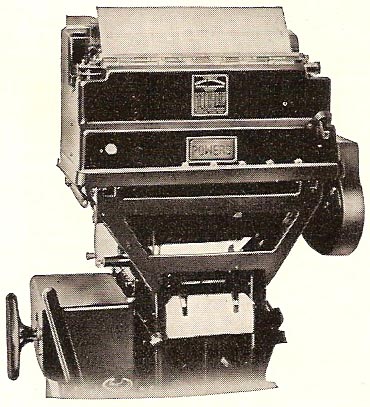 |
Powers Alphabetic Tabulator, 1928. Printed both words and numbers from punched cards. |
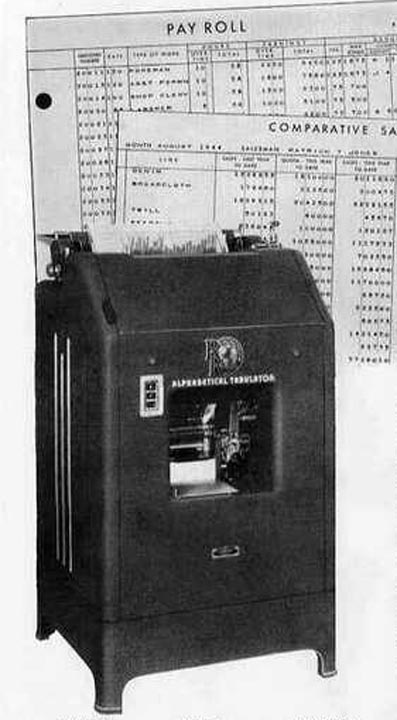 |
Remington Rand Alphabetical Tabulator, 1944. |
In 1924, C-T-R changed its name
to International Business Machines Corp.
(IBM).
Beginning in 1925, the Delaware, Lackawanna & Western Railroad used three key punches, one sorter, and one tabulator with printing attachment to compile statistics on "freight car mileage, separated as between box, open, and miscellaneous, loaded and empty, east and west, weight of cars, weight of contents, by districts, and by directions; time on road; caboose mileage; total mileage by individual engine;...and all of the information or any part of it separated as between classes of service. The D.L.& W. also used this tabulating equipment to audit the amounts received from other railroads for use of D.L.& W. freight cars and the amounts the D.L.& W. paid to other railways for use of their freight cars. This work required operators to punch 240,000 tabulator cards a month. The data punched on cards were the output of computations using Comptometers. (V. D. Thayer, "How the D.L. & W. Uses Tabulating Machines," Railway Age, Aug. 17, 1929, pp. 429-33)
In 1927, IBM advertised several electric machines: key punches,
sorting machines, tabulating machines, and accounting machines that added data
and printed data and output. In the late 1920s,
"although punched-card machines were important and pervasive, the industry
was quite a small one....For example, by the end of the 1920s IBM had only about
three thousand customers in America." (Campbell-Kelly, 1990, p. 137)
Yates (1996) reports that "By the end of the 1920s IBM had purchased
Peirce's patents and introduced its own alphabetical printing capability. Having
caught up with and surpassed Remington Rand, it stayed safely ahead
(establishing a sales advantage of about eight to one in the 1930s) through the
rest of the tabulator era, at the beginning of the 1950s controlling 90% of all
installed punched-card equipment in the U.S. In line with this general trend,
many insurance firms, including such giants as Metropolitan Life and the
American Prudential as well as many smaller firms, acquired large installations
of IBM tabulating equipment by the 1930s." In 1938, the Social
Security office in Baltimore had 222 IBM card punches and 79 card sorters.
IBM Tabulating Machines, late 1930s-1954

|
IBM card punches, late 1930s. |
|
IBM Motor Driven Key Punch Type 15, late 1930s. |

|
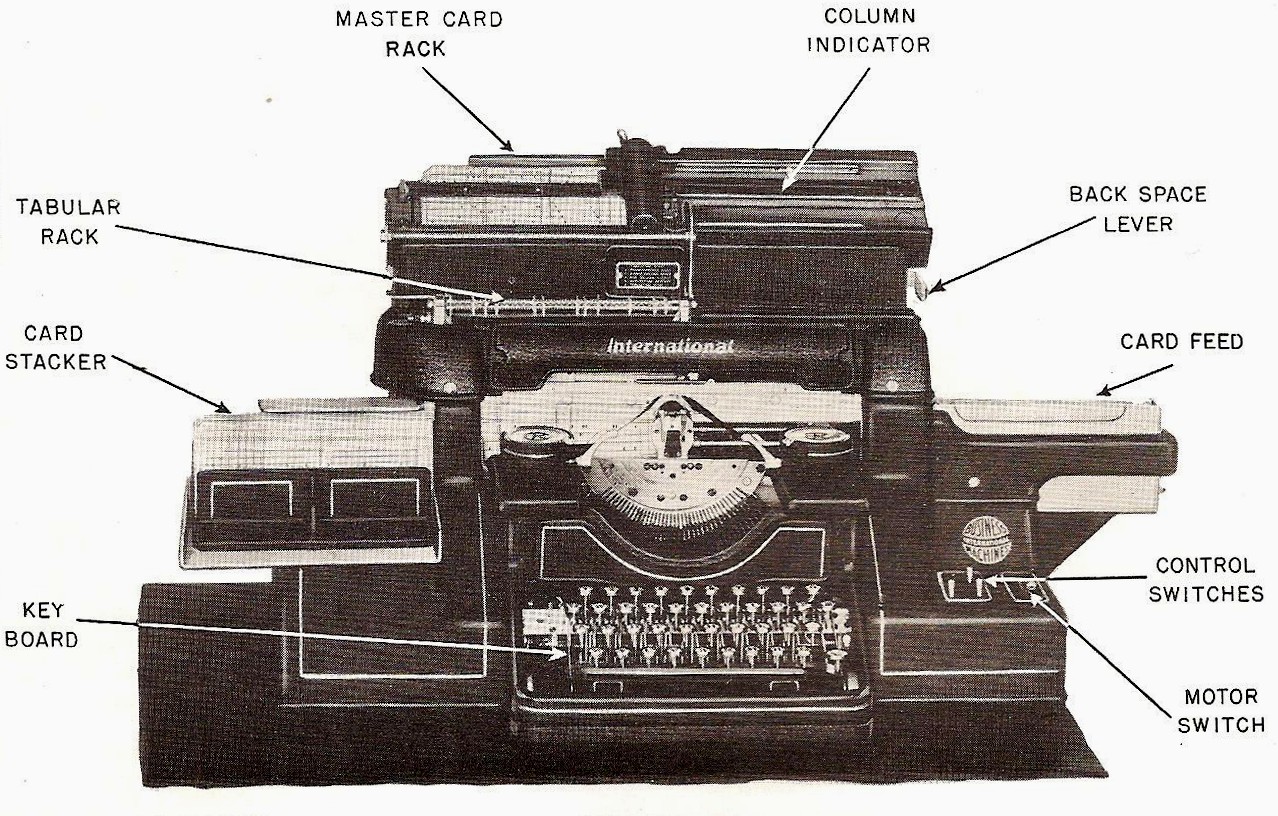
IBM Alphabetic Duplicating Key Punch Type 31, late 1930s. |
|
|
IBM Type 31 alphabetic duplicating key punch. This key punch had a conventional 4-row QWERTY typewriter-style keyboard with numbers and letters, but no shift key. To the right of the typewriter keyboard was a separate numerical keyboard. This machine is in an exhibit at the National Museum of American History, Smithsonian Institution, Washington, DC |
|
|
Students using IBM Type 31 alphabetic duplicating key punches. Source: The Source: School of Commerce, Oregon State University, Corvallis, OR, OSU Archives #882. |
|
IBM Alphabetic Duplicating Printing Punch, late 1930s. |
|
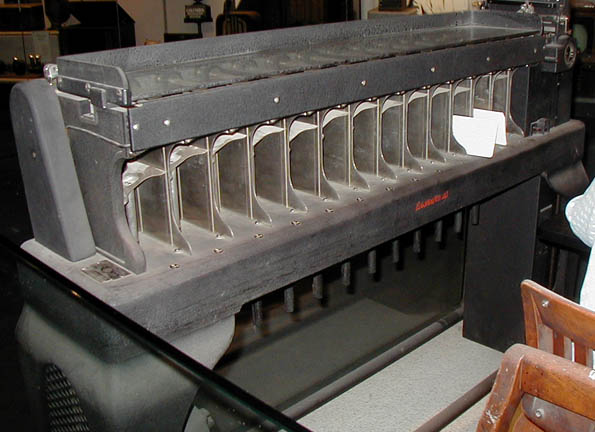
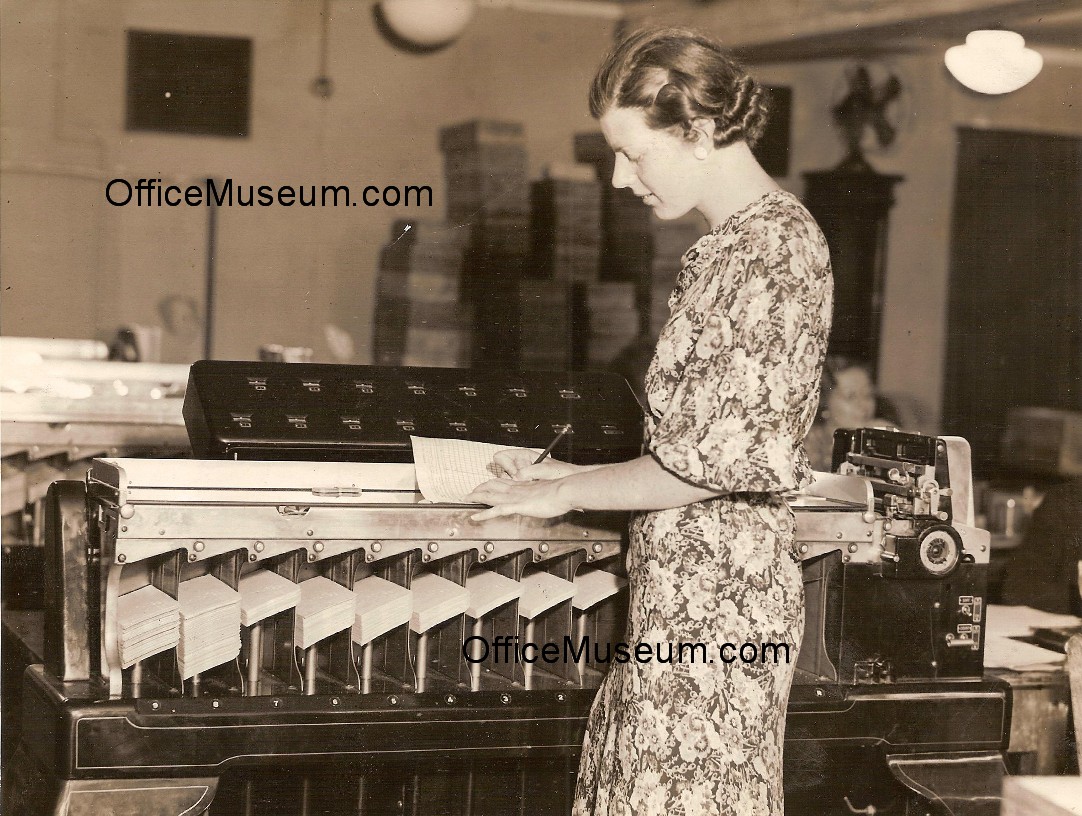
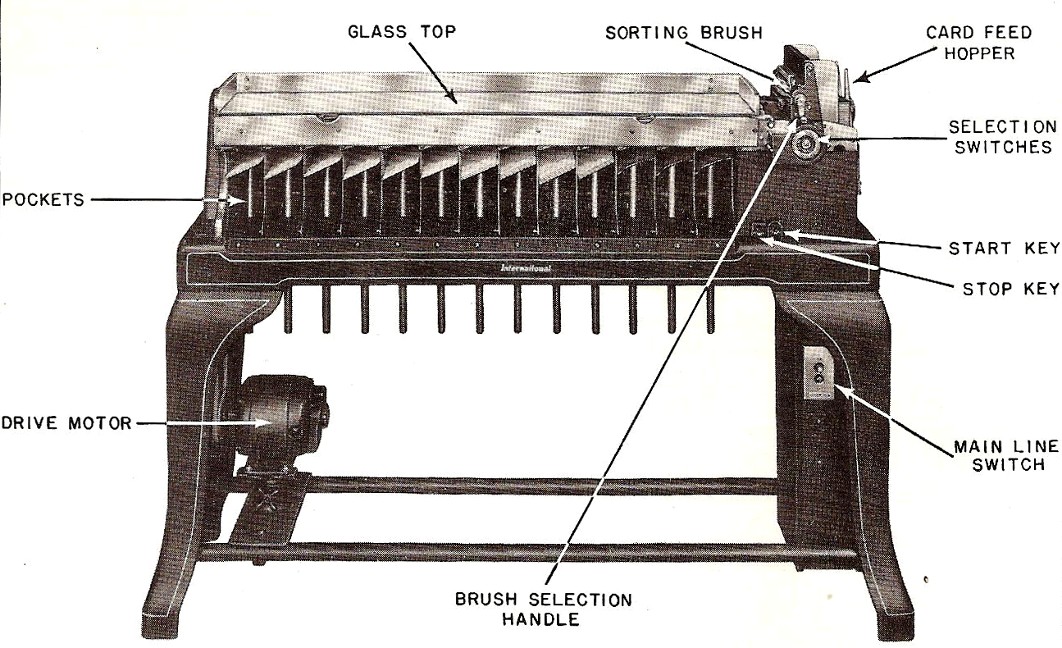
IBM Horizontal Sorter Type 80 used on Unemployment Census, 1934. |
|
IBM Horizontal Sorter Type 80, late 1930s. |
|
|
IBM Type 80 horizontal sorter. |
|
|
IBM Type 80 horizontal sorter. This machine is in an exhibit at the National Museum of American History, Smithsonian Institution, Washington, DC |
|
|
IBM 3-Bank Sorting Printing Counting Machine, 1937, from UK publication. Courtesy of the Museum of Business History and Technology, Wilmington, DE. |

|
IBM Vertical Sorter Type 71, late 1930s. |
|
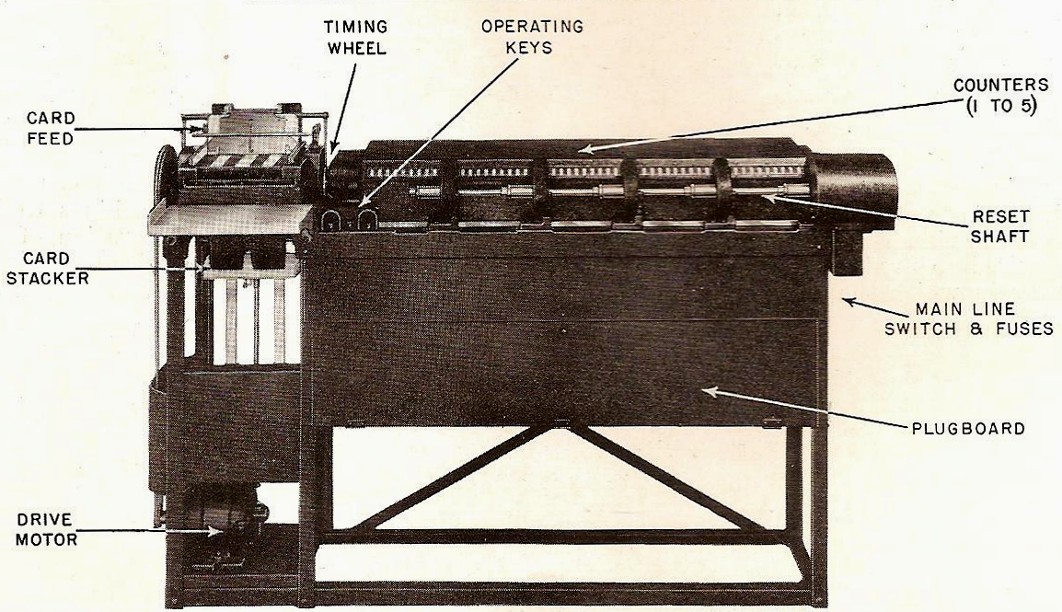
IBM Electric Accounting Machine Type 92, c. 1940. |
|
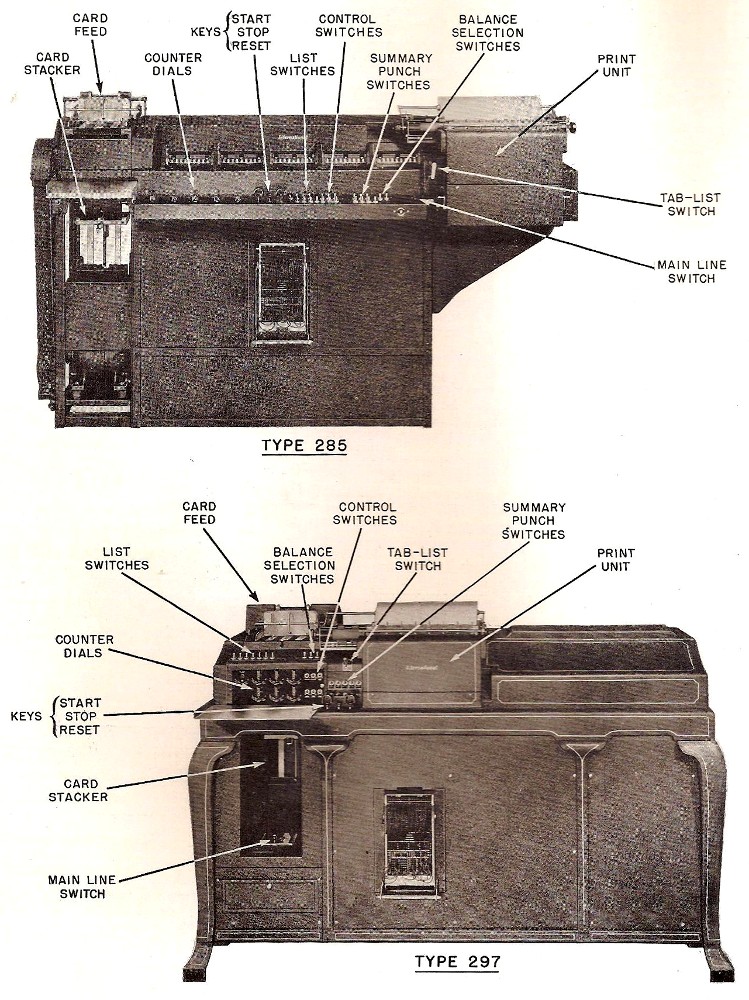
IBM Electric Accounting Machines Type 285 and Type 297, late 1930s. |
|
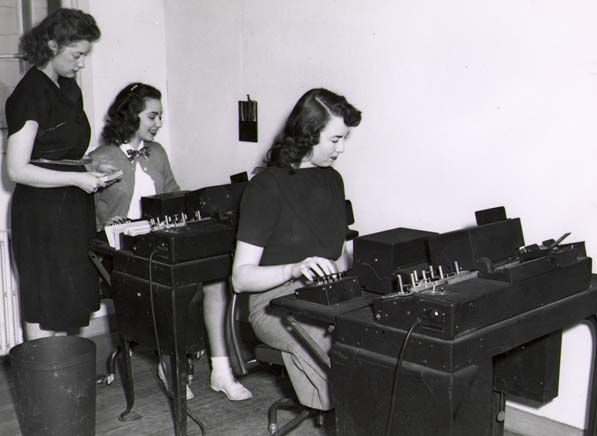
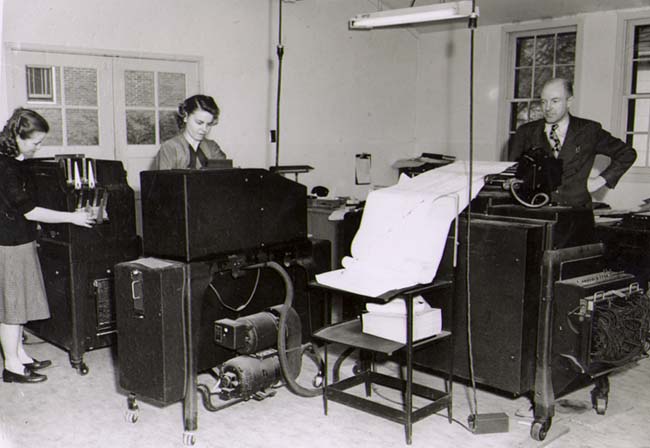
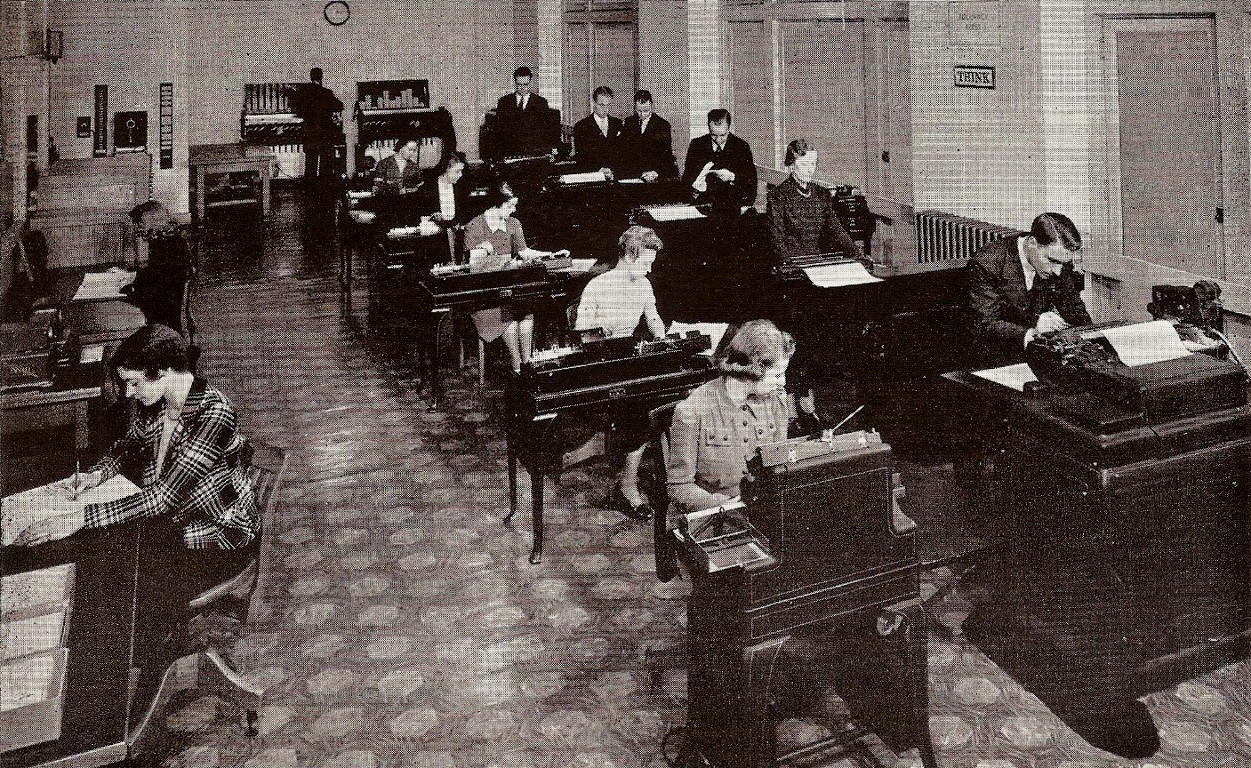
Accounting Department using IBM Tabulating Machines, late 1930s. |
|
|
The center machine appears to be an IBM Type 512 reproducing punch, which copied holes already punched in one card, or one set of cards, into another group of cards. The machine to the right appears to be an IBM Type 405 Alphabetic Accounting Machine, which had a printer. Source: The Source: School of Commerce, Oregon State University, Corvallis, OR, OSU Archives #882. |
|
|
Tabulating Card Punching Office, War Department, Washington, DC, 1942. All the women punching cards are African American. The supervisor in the aisle is white. Source: Washington Post. |
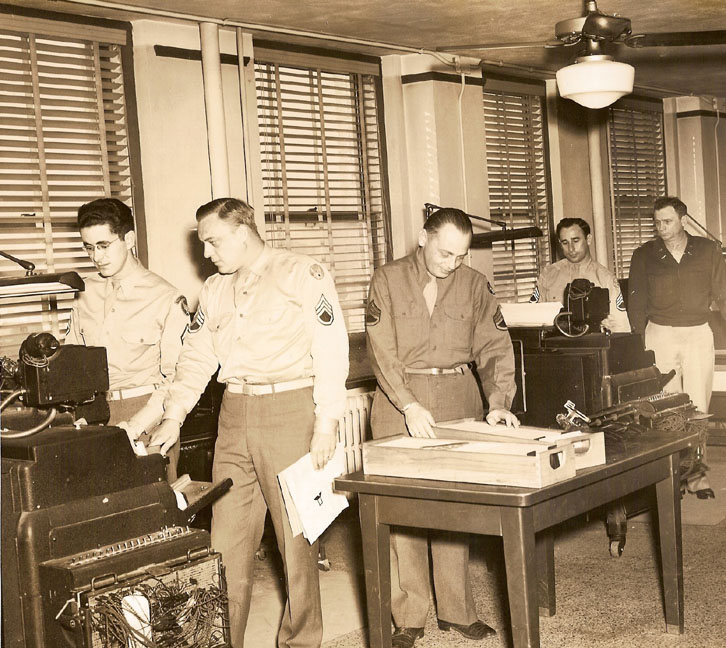 |
U.S. Military Office with Tabulating Machines, probably 1940s. Same room as that in the following photograph. |
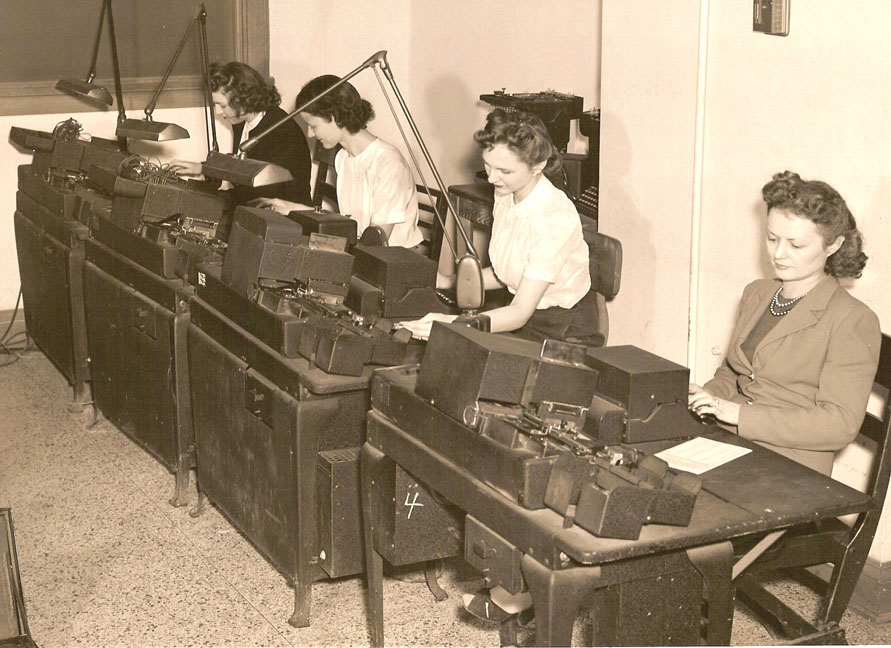 |
U.S. Military Office with Key Punches, probably 1940s. Same room as that in the preceding photograph. |
|
|
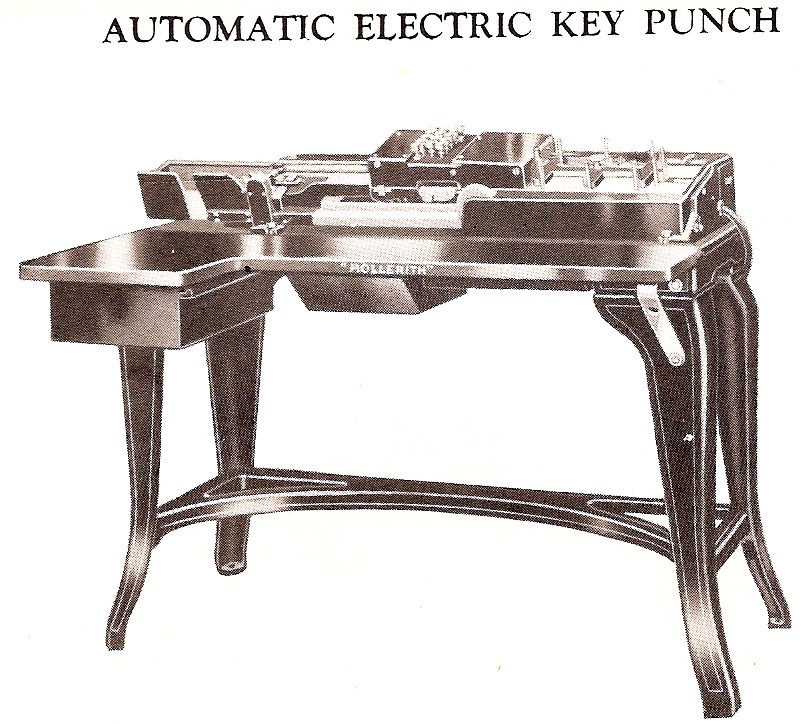
IBM Automatic Electric Key Punch, 1947, from UK publication. Courtesy of the Museum of Business History and Technology, Wilmington, DE. |
|
|
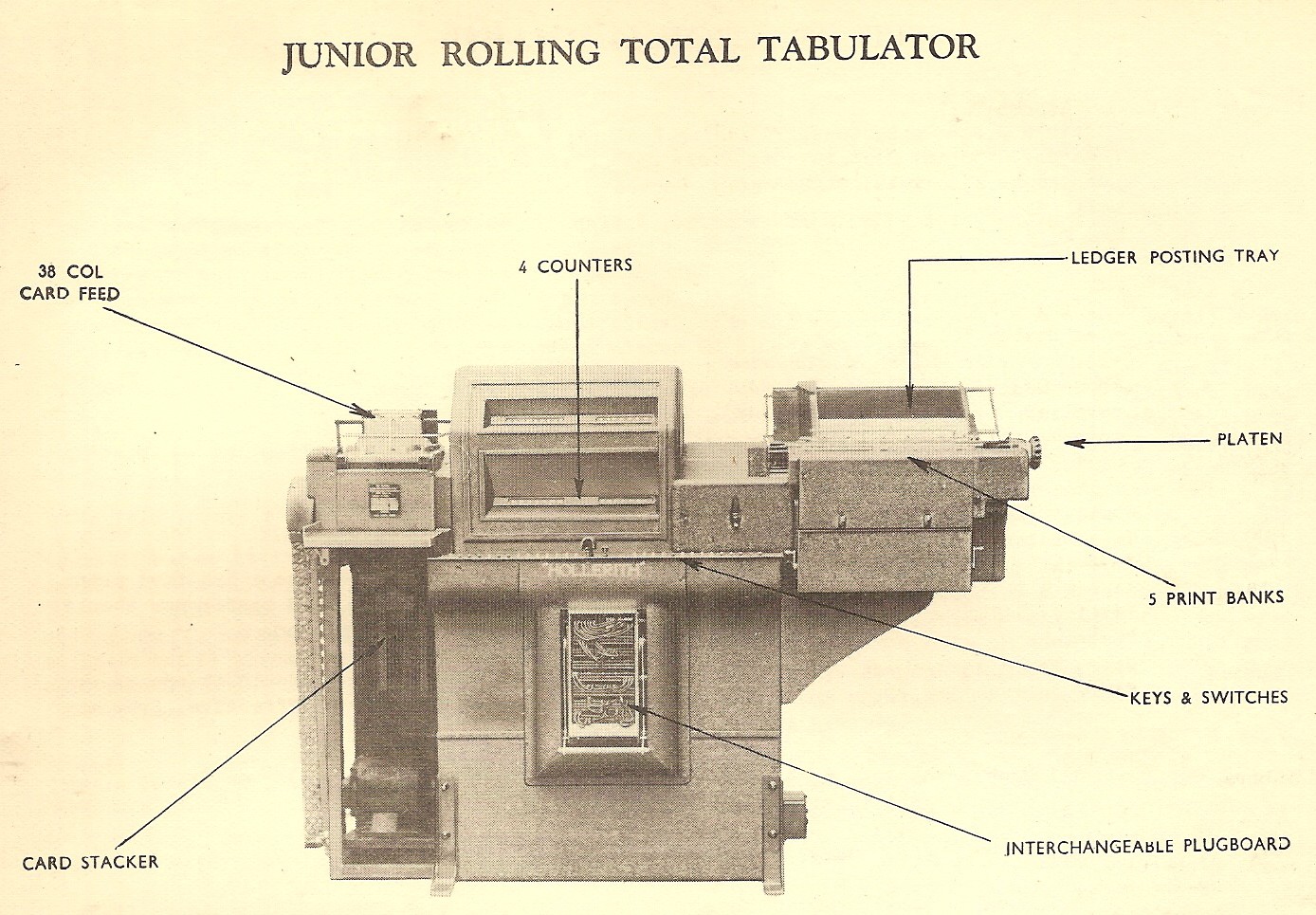
IBM Junior Rolling Total Tabulator, 1951, from UK publication. Courtesy of the Museum of Business History and Technology, Wilmington, DE. |
|
|
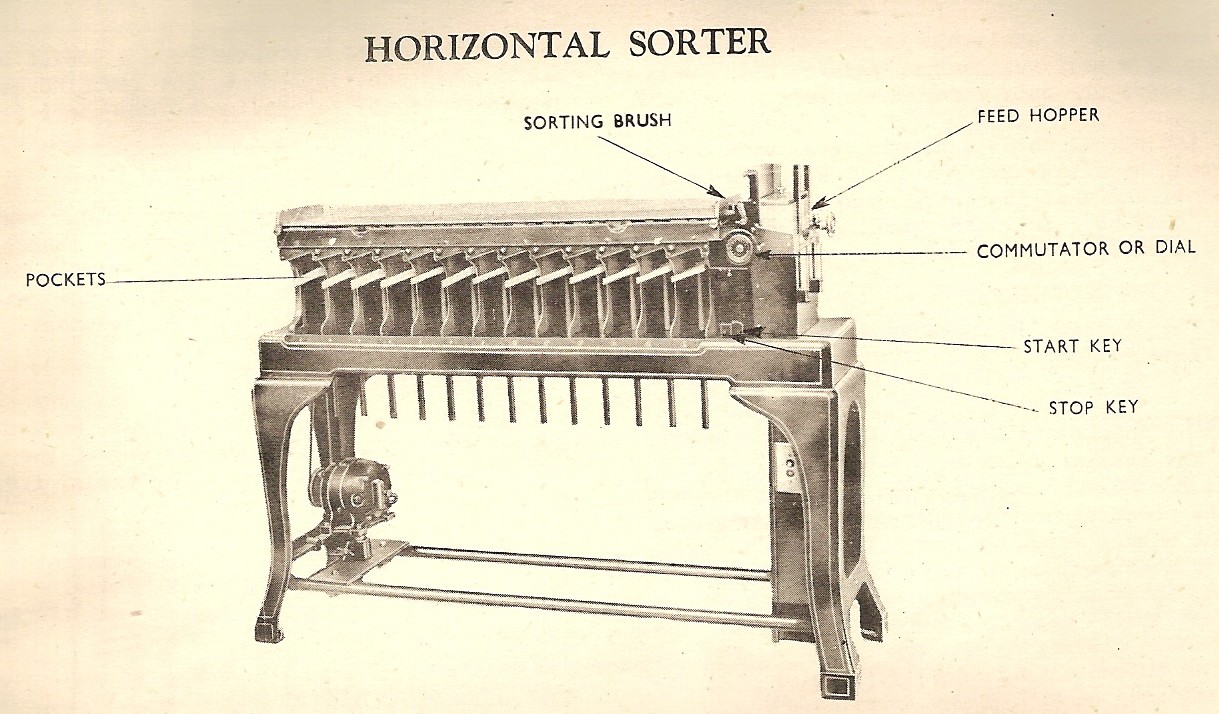
IBM Horizontal Sorter, 1951, from UK publication. Courtesy of the Museum of Business History and Technology, Wilmington, DE. |
|
|
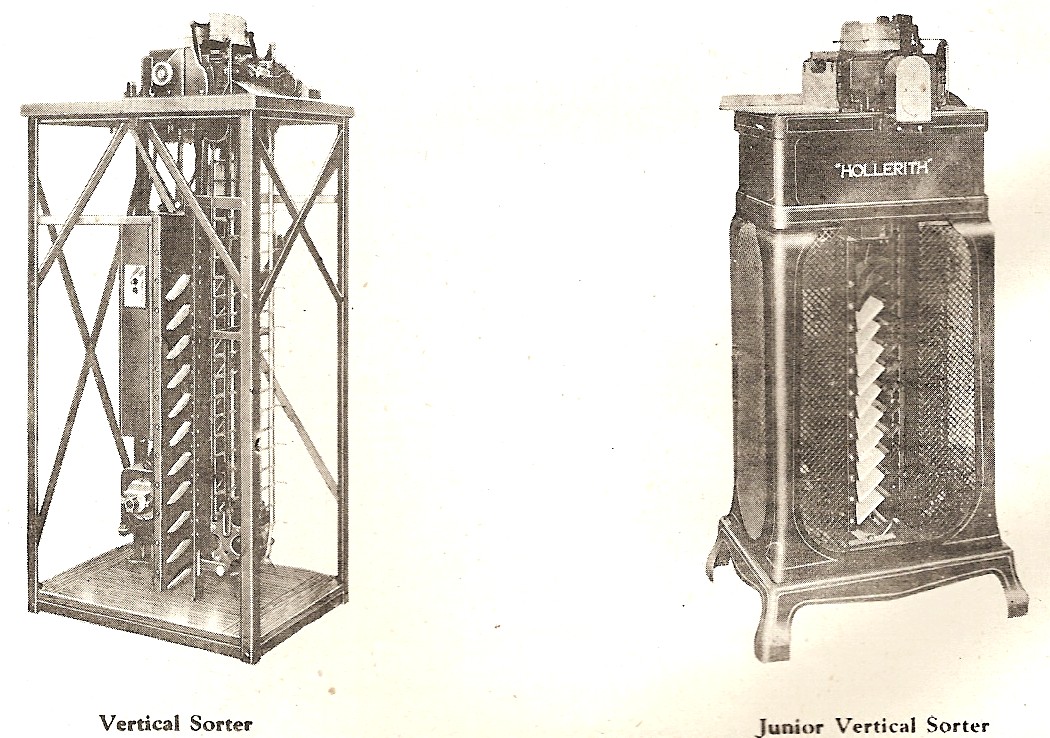
IBM Vertical Sorters, 1951, from UK publication. Courtesy of the Museum of Business History and Technology, Wilmington, DE. |
|
|
IBM Typewriter Keypunch, from UK publication. Courtesy of the Museum of Business History and Technology, Wilmington, DE. |
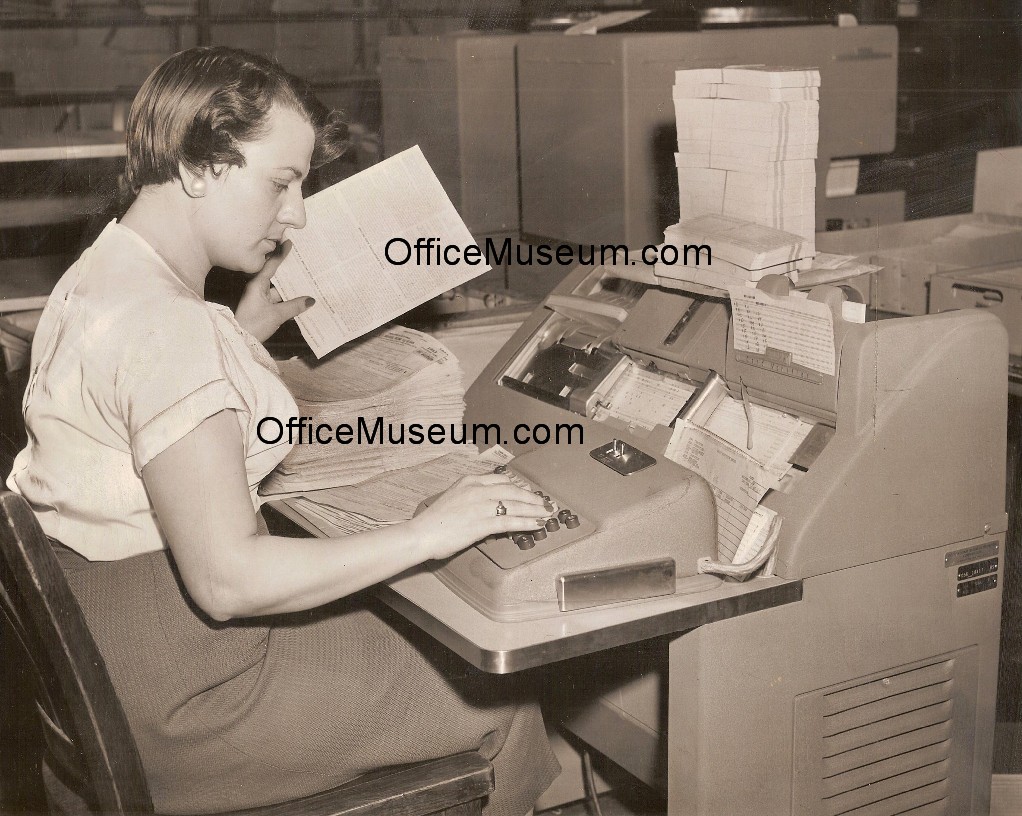 |
Betty Perino uses a keypunch machine to transfer information from income tax returns to tabulator cards, IRS, Chicago, IL, 1954. Based on an internet search, it seems likely that this is Mrs. Betty A. Perino (1921-2014), who became a long-time resident of Virden, IL, which is 226 miles from downtown Chicago. |